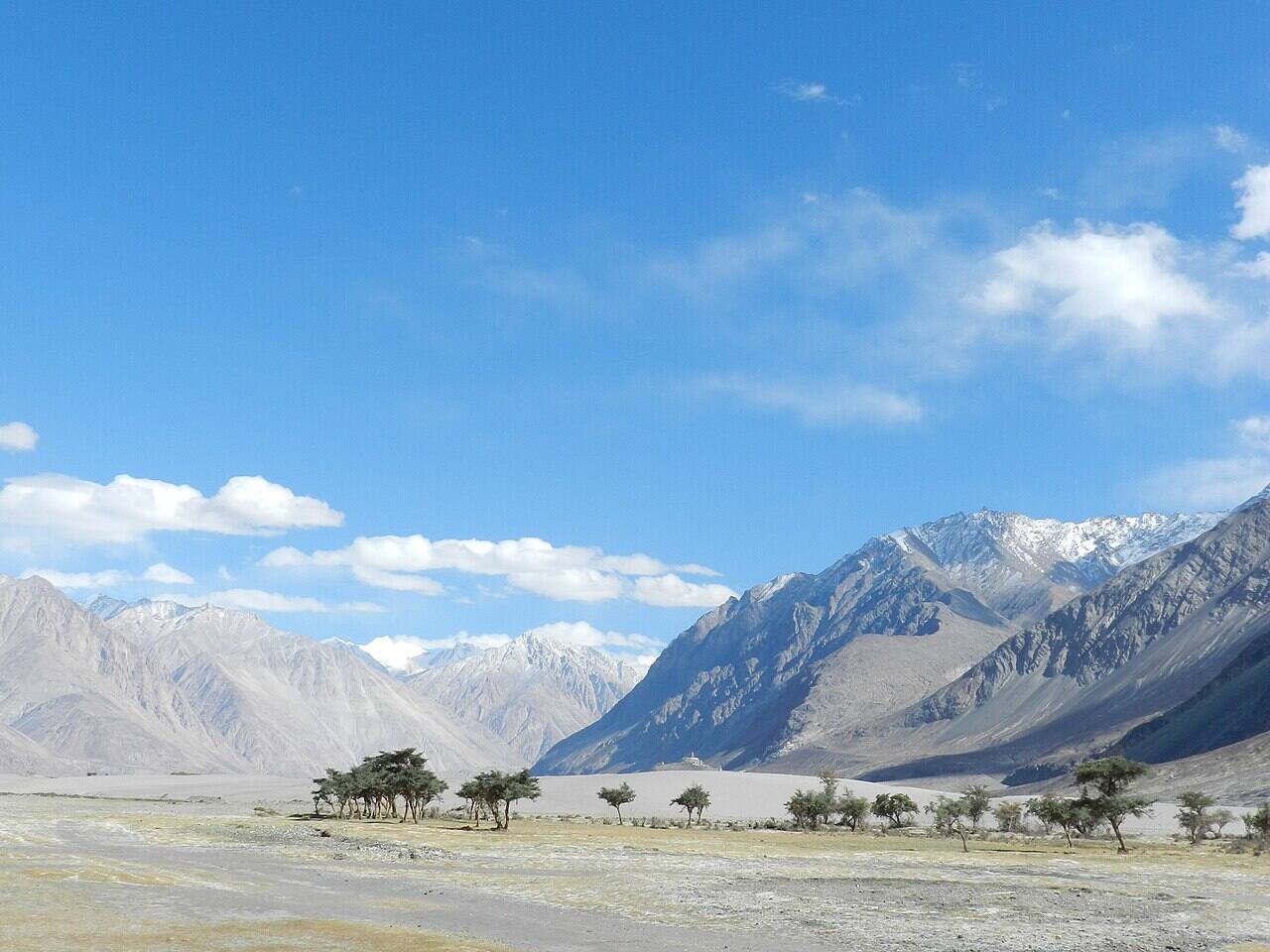
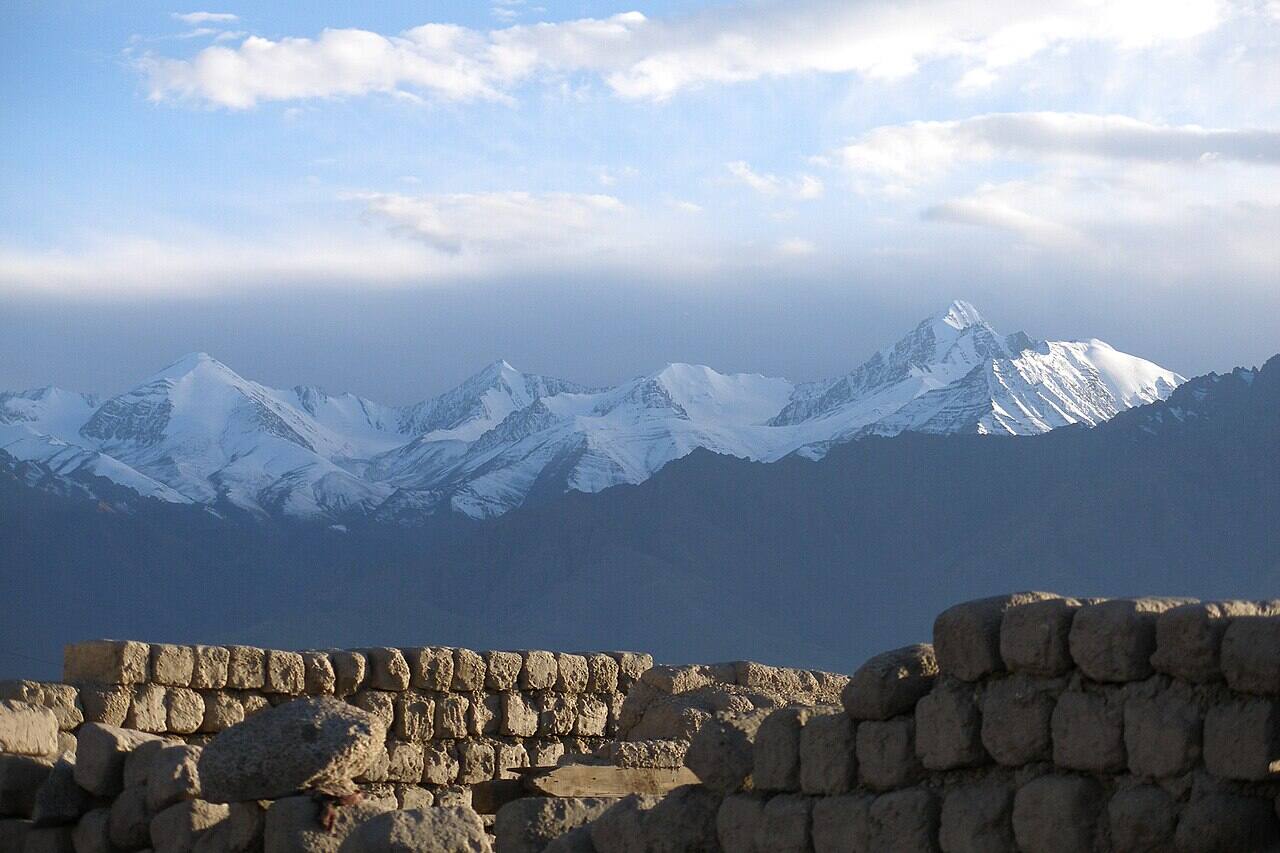
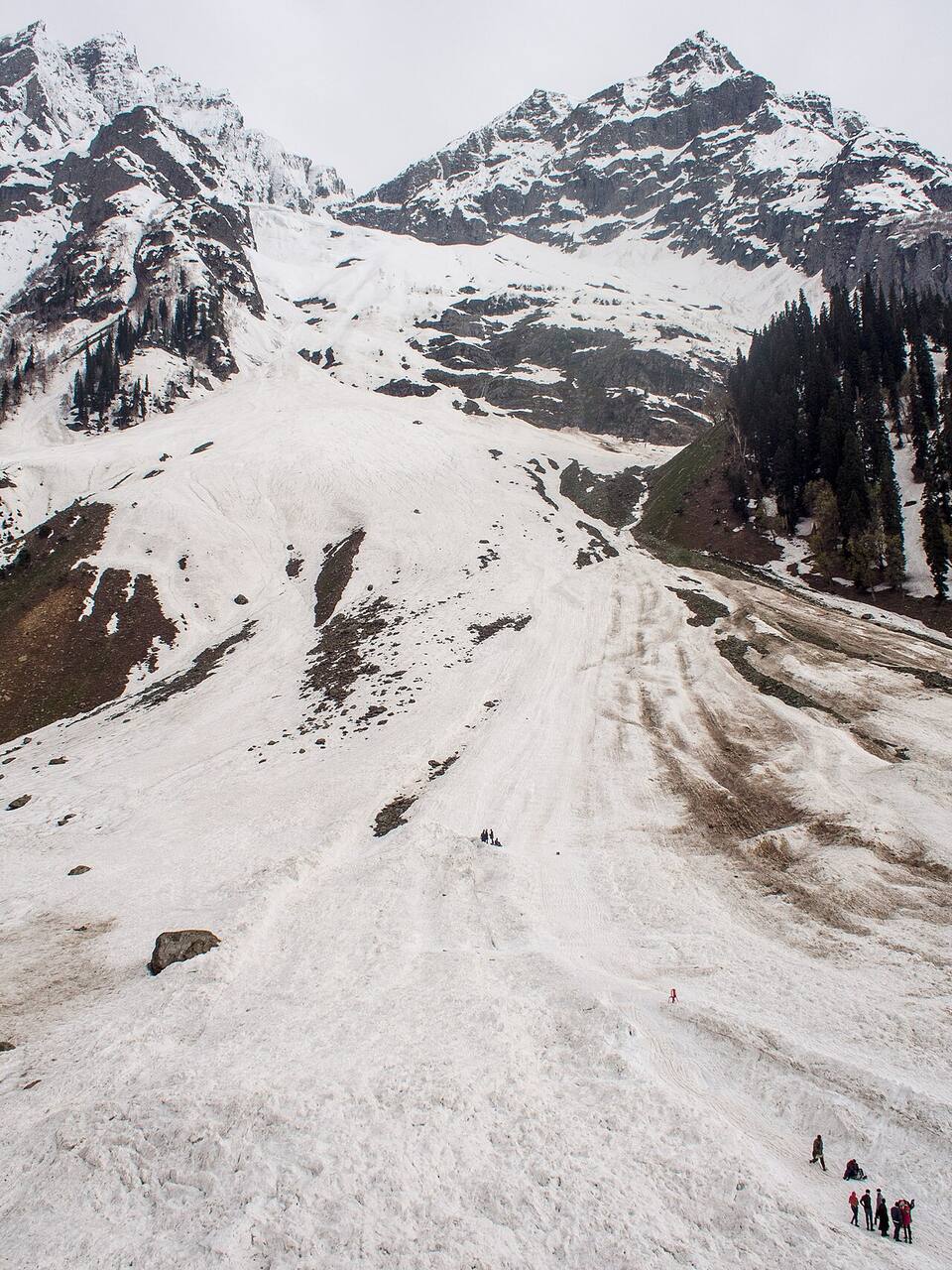
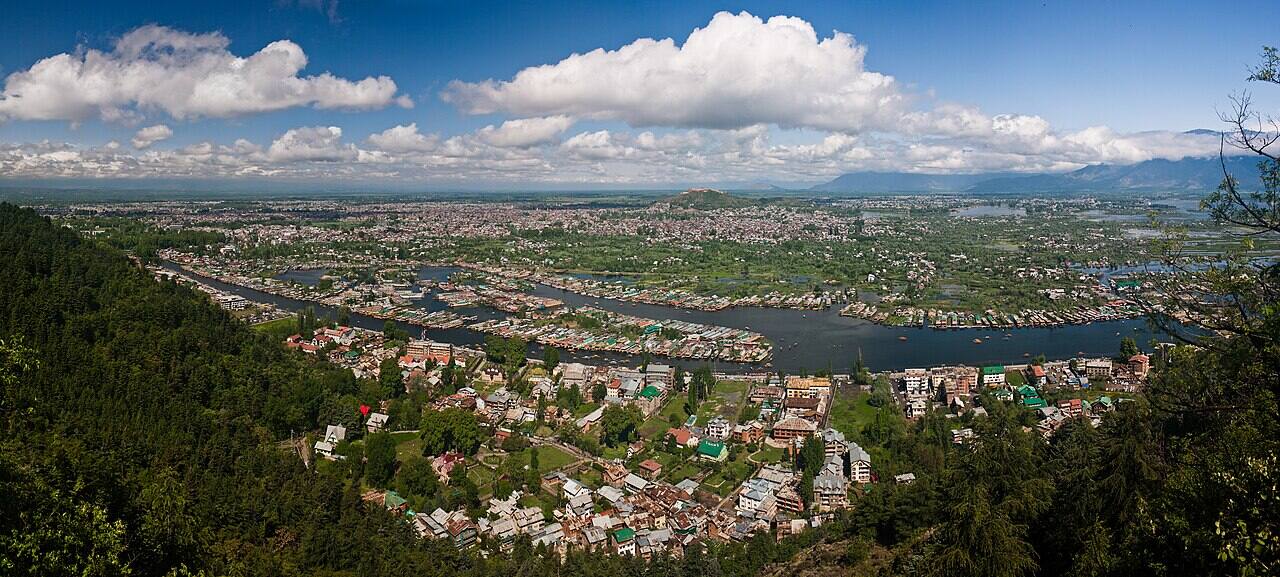
High cold-desert valley north of Leh with sand dunes, two-humped camels and old monasteries.
FamousDesertHeritageVillageAdventure
Nubra lies about 120 km north of Leh across Khardung La, one of the highest motorable passes in the world. People come for the Hunder sand dunes and Bactrian camels, the hilltop Diskit Monastery with its tall Maitreya Buddha, and the Balti village of Turtuk near the border. It suits travellers who have already spent two days getting used to the altitude in Leh.
Trip planner
Plan from your city
Photos
Sand dunes in Nubra ValleyMaitreya Buddha statue at Diskit MonasteryBactrian camel in Nubra Valley
Photos from Wikimedia Commons. Select a photo for its author and licence.
Best time to go
When
What to expect
May to August
Main season. Days are pleasant at about 15 to 25 degrees Celsius and nights are cool. All camps and eating places are open. Higher passes can still have snow in May and June, and rain or rising water can disrupt roads in July and August.
September to mid-October
Cooler, clearer and less crowded, with autumn colour. Many camps start closing from late October.
November to March
Severe cold. Most camps and hotels shut and only a few small guesthouses and homestays stay open. January to March is largely closed for tourism.
April
Apricot trees are in blossom, but few eating places are open and visitors mostly rely on homestay meals.
Sights and activities
1
Diskit Monastery
A hilltop Gelugpa monastery founded in the 14th century, with prayer halls and wide views over the valley. Photography is not allowed inside the prayer hall.
Pale sand dunes set against bare mountains, known for rides on two-humped Bactrian camels. A camel ride costs about 300 rupees for 15 minutes, 350 for 30 minutes and 600 for an hour.
Distance
About 7 km from Diskit
Entry
Free to walk on the dunes; camel rides are charged
Timings
Open all day; early morning or late afternoon is best
A Balti Muslim village full of apricot trees, close to the border and opened to domestic tourists in 2010. It is known for its traditional houses, orchards and buckwheat.
Reach Leh by the Manali-Leh or Srinagar-Leh highway, then cross Khardung La to Diskit: about 116 to 120 km, 5 to 6 hours by car and 6 to 7 hours by bus.
By train
There is no railway in Ladakh. The Leh district site lists Jammu Tawi as the railhead, which is several hundred kilometres away by road.
By air
Kushok Bakula Rinpoche Airport in Leh, about 120 km from Diskit. There are about six direct flights a day from Delhi, taking about 1 hour 20 to 30 minutes.
Where to base yourself
Stay in Diskit or Hunder, which are about 7 km apart and have most of the guesthouses and camps; Sumur and Turtuk are quieter alternatives.
Getting around
A daily bus leaves Diskit for Turtuk at 2:30 pm and returns from Turtuk at 6 am; sources give the fare as 80 to 150 rupees.
A daily bus runs from Panamik to Diskit at 7:30 am for about 75 rupees.
Shared jeeps run from Diskit to Turtuk for about 300 rupees per person and take about 3 hours.
A taxi from Diskit bus stand to Hunder costs about 300 rupees; the 7 km can also be walked.
Most visitors keep a taxi hired from Leh: the union rate for a 2-day Nubra return trip is about 13,000 to 15,500 rupees per vehicle, depending on vehicle class.
Often combined with
Places people usually visit on the same trip, and how long it takes to get between them.
Dorm beds, simple guesthouses and homestays in Diskit, Hunder and Sumur
₹500 to ₹2,200
Mid-range
Hotels and tented camps in Hunder, Diskit and Sumur
₹2,200 to ₹4,500
Luxury
Resort hotels and retreats in Hunder and Sumur
₹8,000 to ₹10,500
Food
Small village eateries serve Ladakhi and Tibetan food, and there is a small cafe at Diskit Monastery for tea and simple meals. Most camps and hotels serve meals to their guests. Outside May to September, expect to eat home-cooked meals at your homestay.
Try these
Apricots (fresh and dried, grown across the valley, especially around Turtuk)
Buckwheat dishes (Turtuk is known for growing buckwheat)
Vegetarian food is available.
Daily costs
Budget level
Stay per room
Food per person
Local transport
Budget
₹1,350
₹500
₹300 per person
Mid-range
₹3,200
₹1,000
₹4,000 per vehicle
Luxury
₹9,000
₹2,000
₹5,000 per vehicle
Per day. Travel to and from your city is added in the planner above.
Permits and documents
Indian citizens do not need an Inner Line Permit, but must pay the Ladakh environment fee online at lahdclehpermit.in: 400 rupees per person plus a wildlife fee of 20 rupees per day, with an optional 50 rupees Red Cross contribution. Carry the receipt and a photo ID (Aadhaar, passport, driving licence or voter ID) for the checkposts. Foreign nationals need a Protected Area Permit, arranged through a registered Leh travel agent or the same portal. Siachen base camp is closed to civilians.
Safety
By day
The main risk is altitude sickness. Spend about 48 hours in Leh first, and do not stay more than about 15 minutes at Khardung La. If symptoms get worse, stop going higher and seek medical help.
At night
Villages are quiet after dark and nights are cold even in summer. Avoid driving over the pass at night.
Solo women
No specific online guidance was found. Shared jeeps and buses are widely used by travellers; book stays ahead outside the main season, when few places are open.
Roads
The road crosses Khardung La at 5,359 metres. It can close because of snow, bad weather or rising water, so check conditions in Leh before leaving. Army checkposts can restrict movement near the border depending on conditions.
Only postpaid connections work in Ladakh. BSNL postpaid is the most dependable; Jio and Airtel postpaid work in the larger villages such as Diskit and Hunder, with patchy coverage.
ATMs and cash
Sources disagree: one reports a single ATM in Diskit, others say there is none that can be relied on. Carry enough cash from Leh.
Fuel
There is a petrol pump in Diskit. Fill the tank in Leh or Karu before crossing the pass.
Medical
Diskit has a government Community Health Centre (CHC Nubra) for basic care. The nearest full hospital is the government SNM Hospital in Leh, about 120 km away over Khardung La.
Possible after proper rest in Leh, but the journey crosses a pass above 5,300 metres and takes 5 to 6 hours each way. Ask a doctor first if there are heart or breathing problems.
Children
The dunes and camel rides appeal to children, but the altitude and long drive are tiring. Ask a doctor.
Wheelchair users
Diskit Monastery is on a hilltop and the dunes are soft sand, so access is likely to be difficult.
Unless a sight is described as accessible, assume it is not step-free.
Culture and responsible travel
At monasteries wear long trousers and cover your shoulders.
Do not take photographs inside prayer halls or the monastery museum.
Ask before photographing people, especially in Turtuk.
Do not fly drones; this is a border region.
Do not litter and avoid single-use plastic, especially on the Hunder dunes.
What to pack
Photo ID (Aadhaar, passport or driving licence); hotels and permits ask for it
Printed copies of your permit, with a few passport-size photos
Thermals, a down or fleece jacket, gloves and a warm cap, even in summer
Sunglasses, high-SPF sunscreen and lip balm: the sun is harsh at altitude
Ask your doctor before you go about altitude sickness and what to carry for it
A rain jacket or umbrella and quick-dry clothes
A scarf against sand and sun, sunglasses, and a warm layer for desert nights in winter
Enough cash for the whole stay, a power bank and offline maps
Your regular medicines, plus basics for stomach upsets, headaches and cuts