High-altitude desert town in Ladakh with an old royal palace and Buddhist monasteries nearby.
FamousHeritagePilgrimageCityAdventure
Leh is the main town of Ladakh and the base for almost every trip in the region. People come for the old palace, the hilltop stupa, the monasteries along the Indus valley and the dry mountain scenery. It suits travellers who can give the first day or two to resting, because the town stands at about 3,500 metres.
Trip planner
Plan from your city
Photos
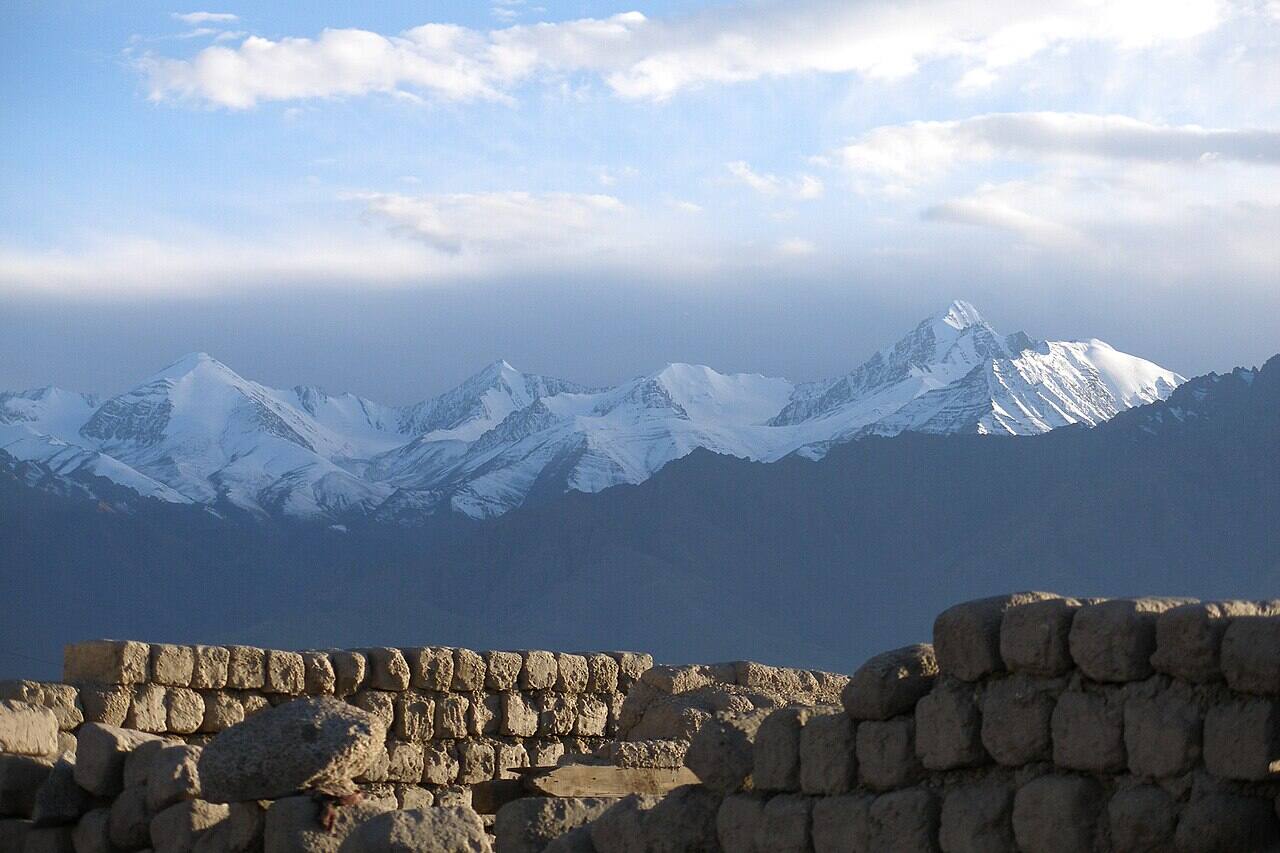
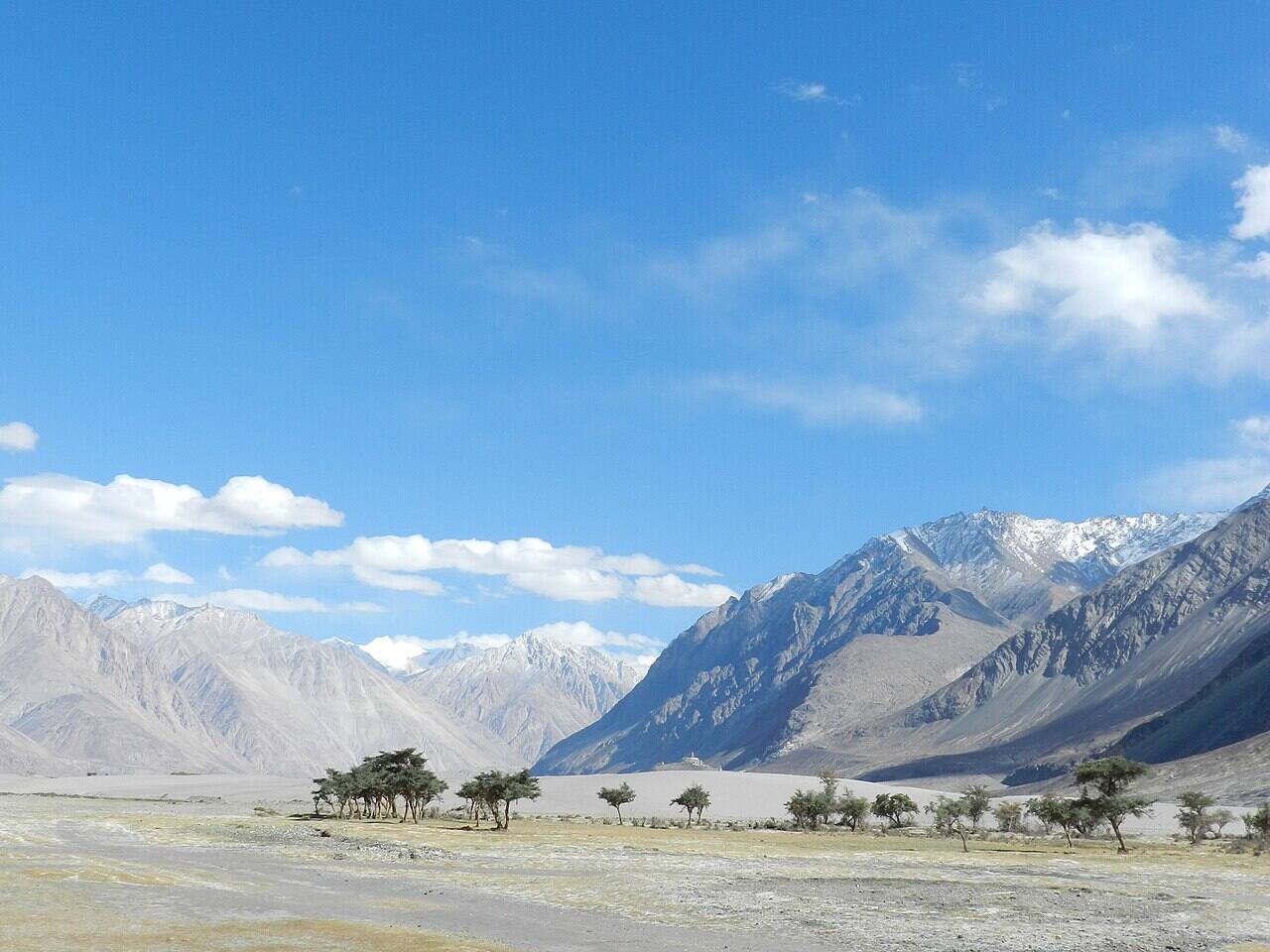
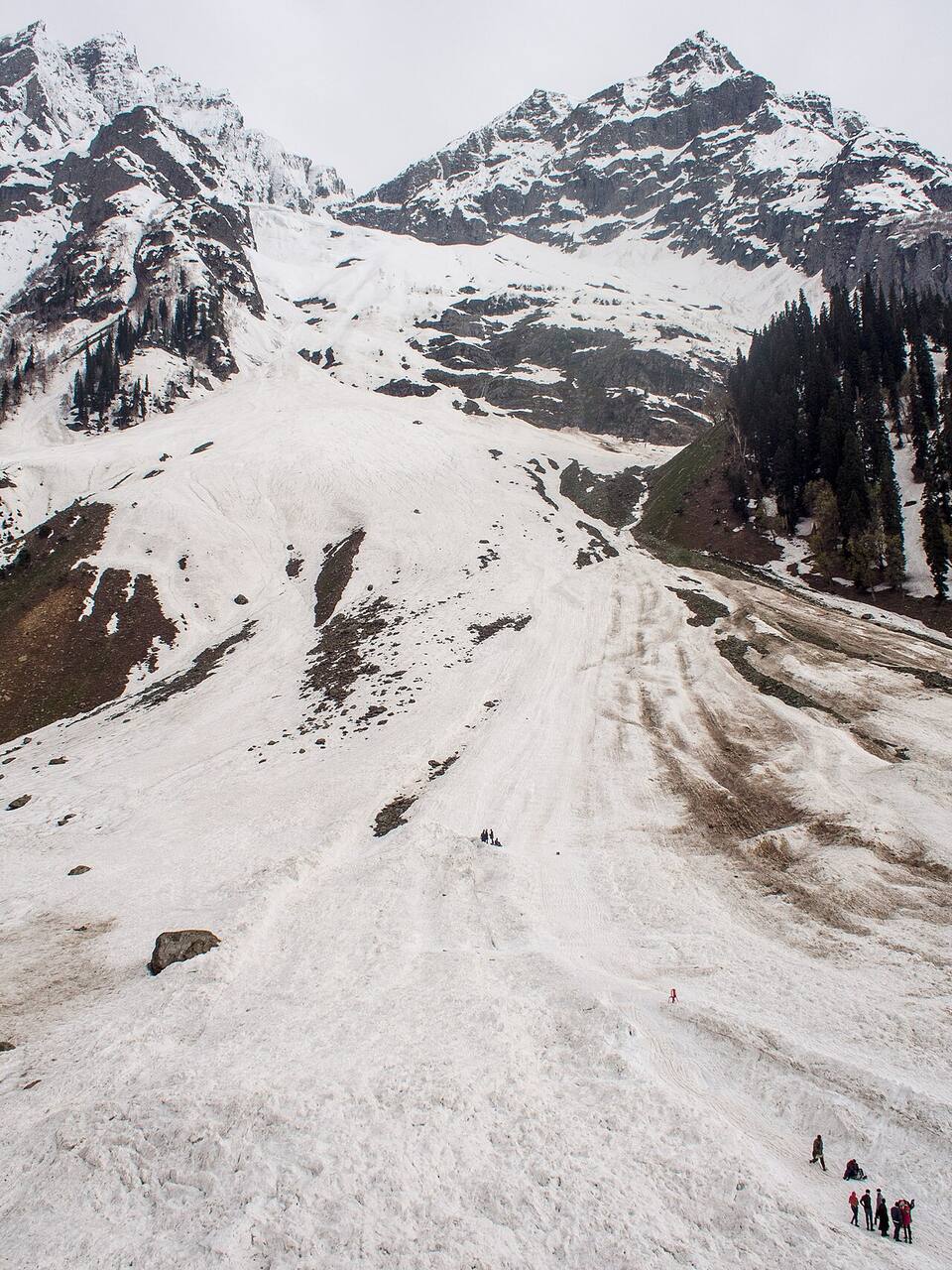
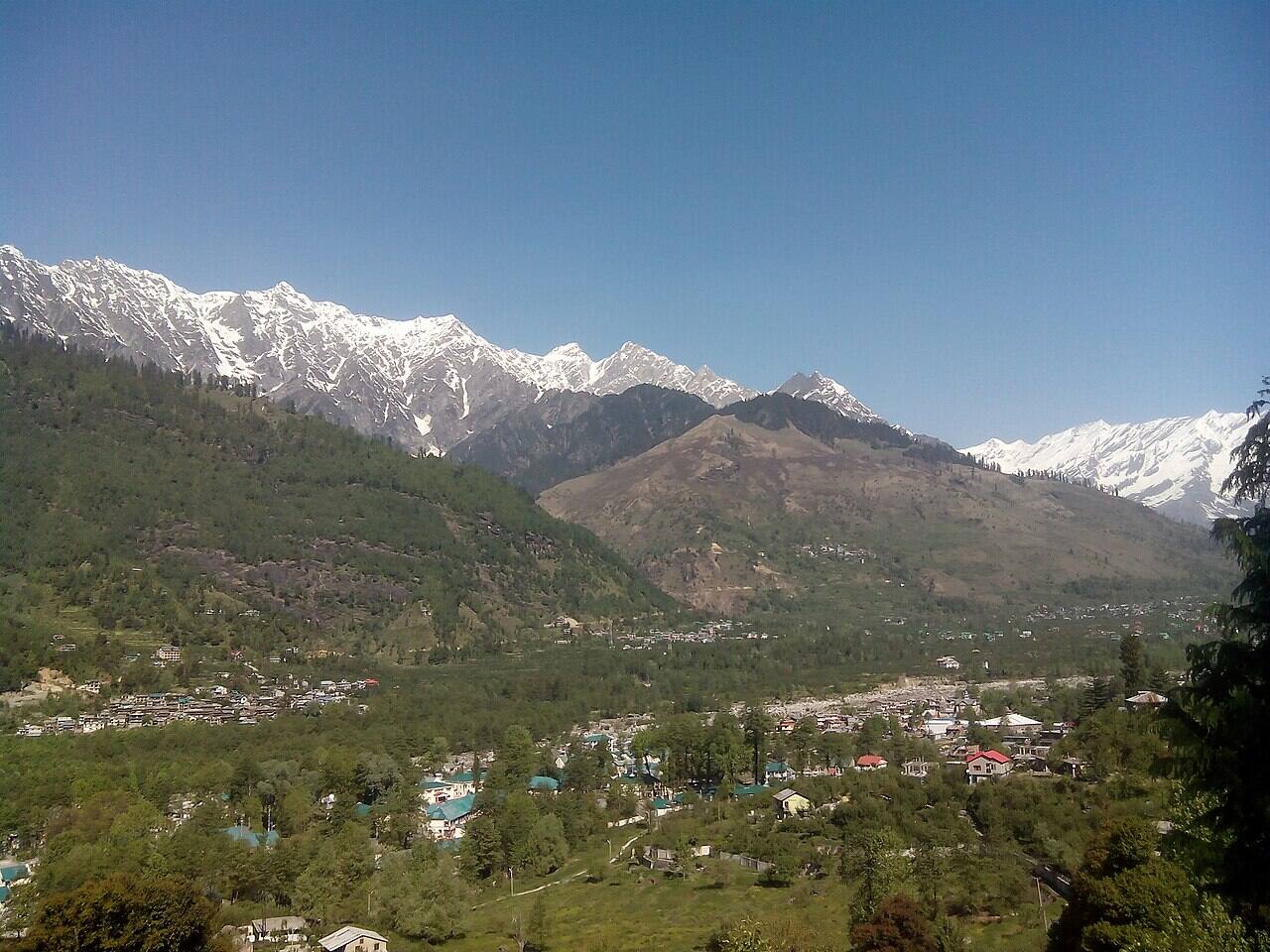
Evening mountain view from LehShanti Stupa in LehThe old castle on Tsemo Hill above LehShanti Stupa on its hilltopThe valley at the head of Leh
Photos from Wikimedia Commons. Select a photo for its author and licence.
Best time to go
When
What to expect
May to June
The tourist season begins. The Srinagar road usually opens by late April or early May and the Manali road by late May. Snow still lies on the high passes and some road stretches are rough.
July to September
The main season, with daytime temperatures of about 25 degrees C. Ladakh is a rain-shadow area and gets little rain, though the approach roads through Himachal and Kashmir can be hit by monsoon rain in July and August. September is widely called the best single month.
October
Winter sets in and the higher areas get snowfall. The Manali to Leh road usually closes around the second week of October.
November to April
Very cold, with night temperatures falling to about minus 15 to minus 20 degrees C. Both highways are closed by snow, so flying is the only way in, and many hotels shut.
Sights and activities
1
Leh Palace
A nine-storey 17th-century royal palace above the old town, built in the style of the Potala in Lhasa and now looked after by the Archaeological Survey of India. The roof gives a wide view of the town and the mountains.
Distance
About 1 km from the main market
Entry
About 25 rupees for Indians and 300 rupees for foreigners (sources differ)
A white-domed Buddhist peace stupa on a hilltop with views over Leh, best at sunrise or sunset. It can be reached by road or by a climb of about 500 steps.
The old capital of Ladakh, later turned into a monastery. Its main feature is a 12-metre copper Buddha statue gilded with gold that rises through three floors.
A twelve-storey monastery on a hill above the Indus valley. It holds a 15-metre statue of Maitreya Buddha that covers two floors, the largest of its kind in Ladakh.
A large monastery in a side valley, with a museum of old thangkas, weapons and artefacts and a library of Tibetan manuscripts. Photography is not allowed inside the museum.
Distance
About 40 km from Leh, 7 km off the Manali road at Karu
Two highways reach Leh, both open only in summer: from Srinagar (about 434 km, usually a two-day trip with a night at Kargil) and from Manali (about 474 km). HRTC runs a direct Delhi to Leh bus in season with a night halt at Keylong, and a Manali to Leh bus that takes about 13 to 14 hours through the Atal Tunnel. Tour operators also run organised trips with transport included from Delhi and Manali; see Guided trips and packages below.
By train
Leh has no railway station. The Incredible India site names Jammu Tawi as the nearest railhead, which is still a road journey of two days or more away.
By air
Kushok Bakula Rimpochee Airport (IXL) is in Leh itself, about 5 km from the old town. The Delhi to Leh flight takes about 1 hour 15 minutes.
Where to base yourself
Stay in Leh town near the main bazaar, which is about 1 km from Leh Palace and close to the taxi stand and bus services.
Getting around
Local buses run from Leh to nearby places for about 20 rupees (airport, Choglamsar, Spituk) and 30 to 40 rupees (Shey, Thiksey, Hemis, Phyang).
A taxi for local sightseeing costs about 2,500 to 3,500 rupees for 4 to 6 hours at union rates; check the current rate at the taxi stand.
One-way union taxi fares from Leh are about 765 to 986 rupees to Thiksey and about 1,482 to 1,892 rupees to Hemis, depending on the car class.
Motorbikes can be hired in Leh from about 1,200 to 1,800 rupees a day for a Royal Enfield 350, and about 2,500 rupees for a Himalayan.
Airport transfers by taxi cost about 500 to 800 rupees each way.
Often combined with
Places people usually visit on the same trip, and how long it takes to get between them.
Private operators run many group road trips and package tours to Leh, mostly starting from Delhi or Manali, with the road-trip season running roughly June to September when the highways are open. The trips opened here cost about Rs 24,000 to Rs 41,000 per person for 8 to 13 days with transport, stay and most meals. No government-run tour page (IRCTC Tourism or a state tourism corporation) could be opened, so none is listed.
Group road trip with transport (Manali - Leh - Srinagar)
Delhi
10 days / 9 nights
₹40,999 per person Per person from Delhi, triple sharing, as listed on the operator's site on 2026-10-04. The same page also lists an 8-day trip with Delhi-Leh flights from Rs 54,999.
Volvo bus Delhi to Manali and back, tempo traveller or cab on the route, stay, breakfast and dinner, inner line permits, trip captain, medical kit and oxygen cylinder (as stated on the page)
Group tour with transport (Amritsar, Srinagar, Leh, Nubra, Pangong, Manali)
Delhi
13 days / 12 nights (12 days / 11 nights for July departures)
₹30,499 per person Delhi to Delhi, per person on shared room basis, as listed on the operator's site on 2026-10-04. Return train to Delhi in AC or sleeper class costs extra.
Coach travel between places, hotels, houseboat and camps, breakfast, lunch and dinner, guided sightseeing (as stated on the page)
Package road tour with vehicle on the Manali - Leh highway
Manali
8 days / 7 nights
₹24,000 per person Per person, starts Manali and ends Leh, as listed on the operator's site on 2026-10-04. Travel to Manali and onward from Leh is not included.
Vehicle (Innova Crysta or tempo traveller), hotels, breakfast and dinner, inner line permits and environment fees, oxygen cylinder in vehicle, sightseeing (as stated on the page)
Checked online on 2026-10-04. A listing here is not a recommendation; we have no tie-up with these operators. Before you pay, check that the operator and its website are genuine, and confirm dates, price and what is included.
Where to stay
Budget level
Type
Price per night
Budget
Guesthouses and homestays
₹800 to ₹1,500
Mid-range
Mid-range hotels
₹2,500 to ₹4,500
Luxury
Boutique and luxury hotels
₹6,000 to ₹12,000
Food
Small local eating places serve thukpa and momos for about 150 to 250 rupees a meal. Tourist restaurants around the bazaar serve Indian and international food at about 400 to 600 rupees a meal.
Try these
Momos (steamed dumplings)
Thukpa (noodle soup)
Skyu (a Ladakhi pasta dish)
Butter tea
Chang (local barley beer)
Vegetarian momos, thukpa and Indian meals are widely listed on menus.
Daily costs
Budget level
Stay per room
Food per person
Local transport
Budget
₹1,200
₹500
₹100 per person
Mid-range
₹3,500
₹900
₹3,000 per vehicle
Luxury
₹9,000
₹2,500
₹3,500 per vehicle
Per day. Travel to and from your city is added in the planner above.
Permits and documents
No permit is needed for Leh town, the monasteries near it (Thiksey, Hemis and others) or the Manali and Srinagar highways. Indians going on to Nubra, Pangong, Tso Moriri or Hanle pay an environment fee of 400 rupees, a Red Cross contribution of 50 rupees and a wildlife fee of 20 rupees a day, online at lahdclehpermit.in or at the office in Leh, and should carry the receipt and a photo ID. Foreigners need a Protected Area Permit for those areas, arranged through a registered travel agent in Leh.
Safety
By day
The main risk is altitude sickness. Travellers who fly in are advised to rest in Leh for at least 24 hours and to avoid climbs such as the Shanti Stupa steps in the first days.
At night
Nights are cold even in summer and very cold in winter.
Roads
The Manali and Srinagar highways cross high passes, are open only in summer and can have rough stretches early in the season. Bus departures depend on the weather.
Emergency numbers
112 (all emergencies)
Practical
Mobile network
Prepaid SIM cards from other states do not work in Ladakh. Postpaid connections work, with Airtel and BSNL named as the ones that work in many areas.
ATMs and cash
ATMs are found only in Leh town in this region and can be out of order, so carry enough cash for trips beyond the town.
Fuel
There are several petrol pumps in and around town.
Medical
There are several hospitals within about 6 km, including Sonam Norboo Memorial Hospital Leh and Army Hospital Leh. In an emergency dial 112, or 108 for an ambulance in most states. Leh is the main town of the region. Ask your hotel for the nearest hospital on arrival.
The altitude is the main concern, and anyone with heart or breathing problems should ask a doctor before going. Leh Palace has steep staircases and slopes and one guide says it is not suitable for senior citizens.
Children
Children are affected by altitude too, so plan rest on arrival and short days. Children under 12 are exempt from the Ladakh environment fee.
Wheelchair users
Leh Palace and the hilltop monasteries involve stairs and slopes. Shanti Stupa can be reached by road.
Unless a sight is described as accessible, assume it is not step-free.
Culture and responsible travel
Photography is not allowed inside the Hemis museum; look for signs before taking pictures in any monastery.
Shey and Thiksey close for a short tea break around 4 pm, and monasteries shut for lunch around 1 pm.
Rest on the first day and drink fluids; the Incredible India site suggests ginger tea and no hard exertion on arrival.
Water and other resources are scarce in this cold desert, so use them sparingly and carry your rubbish back to town.
What to pack
Photo ID (Aadhaar, passport or driving licence); hotels and permits ask for it
Thermals, a down or fleece jacket, gloves and a warm cap, even in summer
Sunglasses, high-SPF sunscreen and lip balm: the sun is harsh at altitude
Ask your doctor before you go about altitude sickness and what to carry for it
A rain jacket or umbrella and quick-dry clothes
Clothes that cover shoulders and knees, and socks for hot stone floors where shoes come off. Some temples do not allow phones or bags, so carry little
Enough cash for the whole stay, a power bank and offline maps
Your regular medicines, plus basics for stomach upsets, headaches and cuts