Tagore's university town near Bolpur, a UNESCO World Heritage Site known for art, music and red-earth woods.
FamousHeritageVillageRiver
Shantiniketan grew from the ashram set up by Debendranath Tagore in 1863 into Rabindranath Tagore's Visva-Bharati University, and was added to the UNESCO World Heritage list in 2023. It suits travellers interested in Tagore, art, Baul music and village crafts, and it is an easy rail trip from Kolkata. The pace is slow, with walks, craft markets and sal forest rather than big monuments.
Trip planner
Plan from your city
Photos
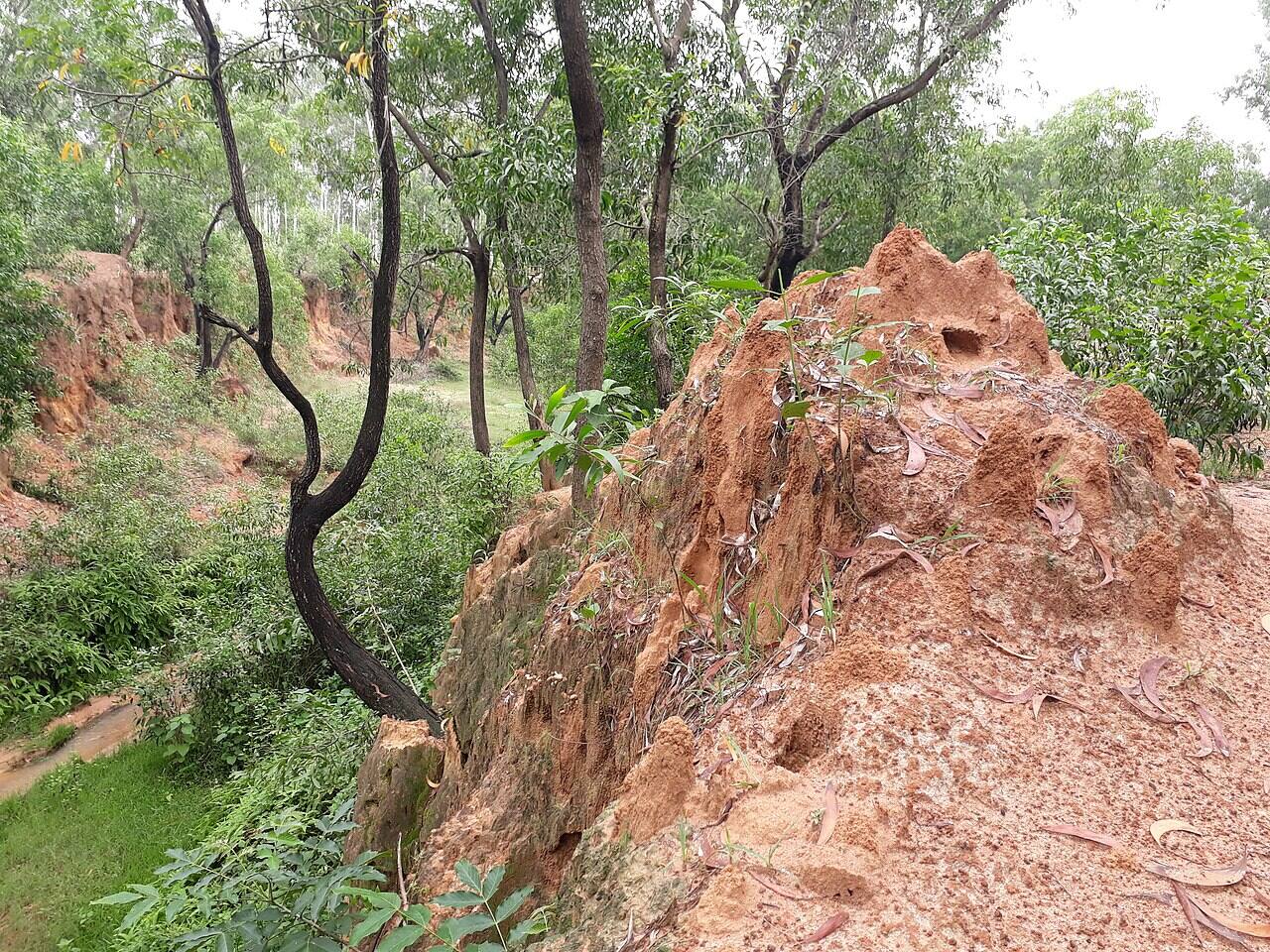
The red-earth Khoai landscape at ShantiniketanTagore's house at ShantiniketanLaterite gullies at KhoaiThe road between Bolpur and Santiniketan
Photos from Wikimedia Commons. Select a photo for its author and licence.
Best time to go
When
What to expect
Mid August to October
Monsoon and after. The land is at its greenest and the Khoai gullies and Kopai river look their best; some days bring heavy rain.
November to February
Cool, pleasant weather for walking. This is peak season, with the Poush Mela fair around late December, so rooms and fares go up.
March
Warm but still comfortable. Spring is popular, and Holi (Basanta Utsav) draws big crowds, so book rooms and trains about two months ahead.
April to June
Hot. Tourist sources do not recommend this period for sightseeing.
Sights and activities
1
Rabindra Bhavana and Uttarayan Complex
The Tagore museum and the group of houses where Tagore lived, the main part of the university open to visitors. Shoes and bags stay outside and photos are not allowed inside.
Distance
In central Shantiniketan, about 2 to 3 km from Bolpur station.
Entry
Reported as Rs 50 to Rs 100 for adults, Rs 10 for students and children; higher for foreigners
Timings
Closed Wednesday, Thursday and government holidays.
Visva-Bharati ashram area (Chhatimtala, Upasana Griha, Kala Bhavana)
The original ashram with the Chhatimtala meditation spot, the 1863 prayer hall with coloured glass, and the art school with Ramkinkar Baij's sculptures. Much of the campus is restricted and needs university permission.
Distance
Central Shantiniketan, next to Uttarayan.
Entry
No campus ticket; entry needs written permission from the university
Timings
Restricted access; check with the university before going
A craft market run by local villagers at the edge of a sal forest on red laterite land, with Baul songs and Santhali dance at times. Sells kantha, batik, terracotta and wood items.
Distance
About 3 km from the university area.
Entry
Free
Timings
Traditionally Saturday afternoons; one recent account says stalls now open daily
Private and state buses run from Kolkata and Durgapur in about 4 hours. The drive from Kolkata is about 150 to 160 km and takes 2 to 3 hours by car.
By train
Bolpur Shantiniketan station, about 2 to 4 km from the campus, is on the line from Howrah (about 146 km by rail), with frequent trains taking about 2 to 3 hours. Prantik station is about 2 to 3 km from the Shyambati side.
By air
Kazi Nazrul Islam Airport at Durgapur is the nearest, about 73 km by road. Kolkata airport is about 155 to 200 km away, roughly 3 to 4 hours by cab.
Where to base yourself
Stay in Shantiniketan itself, around Shyambati, Prantik or Ballavpur, a few km from Bolpur station.
Getting around
Totos (e-rickshaws) are the main way around; a reserved toto from Bolpur station costs about Rs 80 to 150 depending on the time of day.
Cycle rickshaws and tourist cars are also available, and guest houses often arrange them.
Bicycles and bikes can be hired, reported at under Rs 2,000 for 2 to 3 days.
The campus area is compact and pleasant to explore on foot in good weather.
Often combined with
Places people usually visit on the same trip, and how long it takes to get between them.
Government nature centre rooms and resorts near Shyambati and Ballavpur
₹2,000 to ₹3,800
Luxury
Larger resorts and suites around Shantiniketan
₹3,800 to ₹7,000
Food
Small and medium restaurants sit on and around the campus. Amar Kutir has an eatery serving meals on brass plates, and Shakuntala restaurant at Sonajhuri Haat is known for thalis and kosha mangsho. Many hotels and homestays have their own kitchens.
Try these
Bengali thali (rice, dal, vegetables and fish or meat served together)
Kosha mangsho (slow-cooked spicy mutton)
Pithe puli (rice-flour sweets, often sold at the haat)
Homemade pickles and savoury snacks from the Sonajhuri market
Vegetarian thalis are available in Bengali eateries, but fish and meat are common.
Daily costs
Budget level
Stay per room
Food per person
Local transport
Budget
₹1,000
₹400
₹150 per vehicle
Mid-range
₹2,500
₹800
₹600 per vehicle
Luxury
₹5,000
₹1,500
₹2,000 per vehicle
Per day. Travel to and from your city is added in the planner above.
Permits and documents
No permit is needed to visit the town. Most of the Visva-Bharati campus is closed to tourists without written permission from the university; Rabindra Bhavana and Uttarayan are open with a ticket. Carry photo ID, and students should carry their college ID for the student rate.
Safety
By day
Generally calm and safe for visitors. Crowds and touts increase sharply during Poush Mela and Holi.
At night
The town is quiet after dark and streets near the forest and Khoai are poorly lit, so arrange a toto back to your hotel in advance.
Solo women
Commonly visited by students and solo travellers; usual precautions apply, especially in festival crowds and on lonely forest paths after dark.
Roads
Roads from Kolkata and Durgapur are paved. Inside the town, roads are narrow and shared with totos, cycles and pedestrians.
Emergency numbers
112 (all emergencies), 102 (ambulance)
Practical
Mobile network
All the main networks (Jio, Airtel, Vi and BSNL) work in town. Bolpur is a sizeable town with general network availability.
ATMs and cash
ATMs are in Bolpur town near the station and market; carry some cash for the haat and totos.
Fuel
Fuel stations are in and around Bolpur on the main roads.
Medical
Hospitals are easy to find across the city. In an emergency dial 112, or 108 for an ambulance in most states. Larger hospitals are in Bolpur and Durgapur.