Rajasthan tiger reserve with jeep safaris, lakes and a hilltop fort near Sawai Madhopur.
FamousWildlifeHeritageLakePilgrimage
Ranthambore is one of the better known places in India to look for wild tigers, on morning and afternoon safaris through dry forest, grassland and lakes. An old hill fort with a busy Ganesh temple stands inside the reserve, so a trip mixes wildlife with history. It suits families, photographers and first-time safari visitors, because the railway station is close and there are hotels at every price.
Trip planner
Plan from your city
Photos
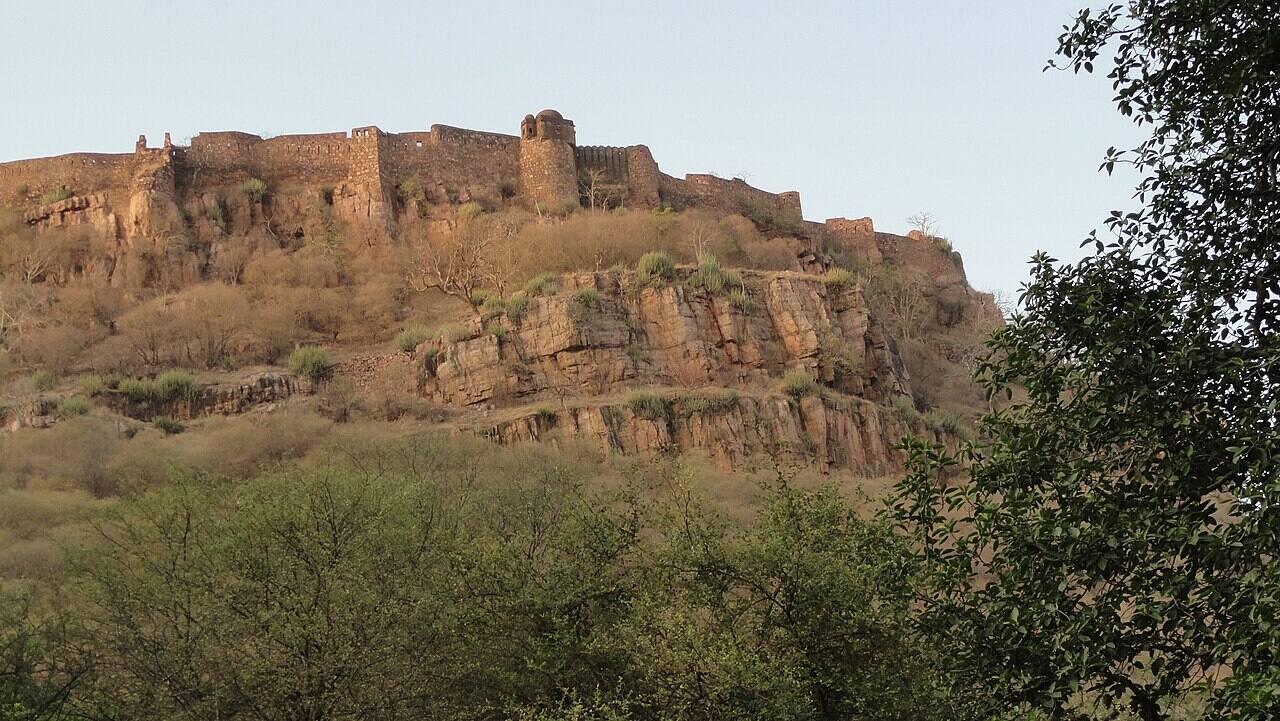
Ranthambore Fort seen from inside the national parkA tiger in RanthamboreInside Ranthambore National ParkBanyan tree in Ranthambore National ParkEntrance gate of Ranthambore National Park
Photos from Wikimedia Commons. Select a photo for its author and licence.
Best time to go
When
What to expect
October to March
Pleasant and cool, about 10 to 25 C. This is the busiest season, and early morning safaris in an open vehicle are cold. Safaris run from 6:30 or 7:00 am and from 2:00 or 2:30 pm.
April to June
Very hot, about 35 to 45 C. Guides say tiger sightings are most likely now because animals stay near water. Safaris start at 6:00 am and at 3:00 or 3:30 pm.
July to September
Monsoon. The core zones 1 to 5 are closed from 1 July to 30 September. Booking sites say only the buffer zones 6 to 10 run safaris in these months.
Sights and activities
1
Ranthambore Tiger Reserve safari
A drive of about 3.5 hours in a 6-seat open gypsy or a 20-seat open canter through one of 10 zones. Zones 1 to 5 are the core zones and 6 to 10 are buffer zones. Tigers, leopards, sloth bears, deer and marsh crocodiles live here.
Distance
Safari vehicles start about 10 to 14 km from Sawai Madhopur station
Entry
Indians about 1,300 to 1,500 per gypsy seat and 800 to 900 per canter seat at listed rates; booking agents charge about 1,600 to 2,300. Foreigners about 2,500 to 5,500
Timings
Two safaris a day, morning and afternoon, 1 October to 30 June. Zones 1 to 5 closed on Wednesdays, zones 6 to 10 closed on Tuesdays
A hill fort about 481 m above sea level, with walls about 7 km around. It is part of a UNESCO World Heritage listing. Inside are Badal Mahal, Hammir's court, a 32-pillared chhatri, temples, a mosque and a stepwell.
Distance
About 12 to 13 km from Sawai Madhopur station
Entry
About 15 for adults and 10 for children (one source)
An old Ganesh temple inside the fort, said to date from about 1300 AD. People post wedding invitations to the deity here. It is reached by the stone ramp and steps through the fort gates.
Distance
About 12 km from Sawai Madhopur, inside the fort
Entry
Free
Timings
Five aartis a day: early morning, 9 am, noon, sunset (about 6:30 pm in summer, 5:45 pm in winter) and 8 pm
State and private buses run to Sawai Madhopur. By road it is about 180 km from Jaipur (3 to 3.5 hours), about 380 to 400 km from Delhi (6 to 7 hours) and about 240 km from Agra.
By train
Sawai Madhopur Junction, on the Delhi-Mumbai main line, is about 10 to 14 km from the park. It has direct trains from Delhi, Jaipur, Agra and Mumbai.
By air
Jaipur International Airport is the nearest, about 160 to 180 km away by road.
Where to base yourself
Stay in Sawai Madhopur town or at one of the hotels and resorts between the town and the park, about 10 to 14 km from the railway station.
Getting around
Most hotels and resorts arrange pick-up and drop at the railway station and at the safari starting point; ask the price when you book.
A booked AC taxi between Sawai Madhopur station and the Ranthambore hotel area, about 12 km, is listed at about 1,100 to 1,200 for a small car and 2,300 for an SUV.
Auto-rickshaws work in and around the town; Agree the price first.
Only local RJ25-registered vehicles and licensed fort-route jeeps are reported to be allowed up to the fort base since 2025, so visitors with outside cars change to a local vehicle in town.
Taxis hired by distance for outings such as Surwal Lake or the Chambal are quoted at about 10 per km for a sedan and 14 to 16 per km for an Innova or Ertiga.
Often combined with
Places people usually visit on the same trip, and how long it takes to get between them.
Most visitors eat at their hotel or resort, and many stays include meals. In Sawai Madhopur there are about 59 listed restaurants, from low-priced Indian places such as Manisha Restaurant and Food Corner to cafes such as Fateh's Cafe and fine dining at the luxury resorts. There are no shops inside the park, so carry water on safari.
Try these
Rajasthani thali (a set plate of local vegetable dishes, dal, rotis and rice)
Laal maas (a spicy red mutton curry)
Biryani (spiced rice with meat or vegetables)
Vegetarian food such as Rajasthani thali is on restaurant menus.
Daily costs
Budget level
Stay per room
Food per person
Local transport
Budget
₹1,500
₹500
₹300 per person
Mid-range
₹5,000
₹1,200
₹1,200 per vehicle
Luxury
₹25,000
₹3,000
₹2,300 per vehicle
Per day. Travel to and from your city is added in the planner above.
Permits and documents
No separate permit is needed beyond the safari booking, made online through the Rajasthan Forest Department system or an agent, up to about 90 days ahead. Each visitor must give ID details when booking and carry the same original photo ID to the park: Aadhaar, voter ID, driving licence or passport for Indians, and a passport for foreigners. Bookings are generally non-refundable, and the zone may be allotted rather than chosen.
Safety
By day
Safaris run in open vehicles with a guide; stay seated and never get down inside the park. Summer afternoons reach 35 to 45 C, so carry water, a hat and sunscreen.
At night
The hotel road runs beside forest. The fort area is described as real tiger country, so do not walk in the forest edge or to the fort after dark.
Solo women
No specific problems were found reported online. Hotel-arranged transfers and shared canter or gypsy safaris are the usual way to get around.
Roads
Roads from Jaipur and Delhi are highways. Park tracks are rough and dusty, so a scarf or mask helps.
Emergency numbers
112 (all emergencies)
Practical
Mobile network
One booking site says mobile phones are not allowed on safari.
ATMs and cash
Sawai Madhopur is the district town, so use ATMs there before going to the resorts.
Fuel
Fill up in Sawai Madhopur town.
Medical
Sawai Madhopur is the district headquarters. Ask your hotel for the nearest hospital. Carry personal medicines, as there are no shops inside the park.
Safaris involve about 3.5 hours of bumpy driving in an open vehicle but no walking. The fort needs a climb up a stone ramp and steps through several gates, which may be hard for some.
Children
Children are welcome on safaris; a gypsy takes 6 people plus up to 2 children under 5. Early starts and winter cold or summer heat can be tiring for small children.
Wheelchair users
Safari vehicles are high open jeeps and trucks, and the fort is reached by ramp and steps, so access is likely to be difficult.
Unless a sight is described as accessible, assume it is not step-free.
Culture and responsible travel
Wear dull colours such as olive, khaki, beige or brown on safari and keep quiet near animals.
Do not litter, feed animals or ask the driver to leave the track or stay past the closing time.
Trinetra Ganesh Temple is an active place of worship: dress modestly. It is busiest on Wednesdays and during the Ganesh Chaturthi fair.
Langurs live all over the fort; keep food packed away.
Local craft centres such as Dastkar Ranthambore and the Ranthambore School of Art sell block-printed textiles and wildlife paintings made by local artisans.
What to pack
Photo ID (Aadhaar, passport or driving licence); hotels and permits ask for it
Printed copies of your permit, with a few passport-size photos
Clothes in earthy colours, a cap and binoculars for safaris
Clothes that cover shoulders and knees, and socks for hot stone floors where shoes come off. Some temples do not allow phones or bags, so carry little
Some cash in small notes for autos, stalls and tips
Your regular medicines, plus basics for stomach upsets, headaches and cuts
Multi-stop trips that include Ranthambore National Park