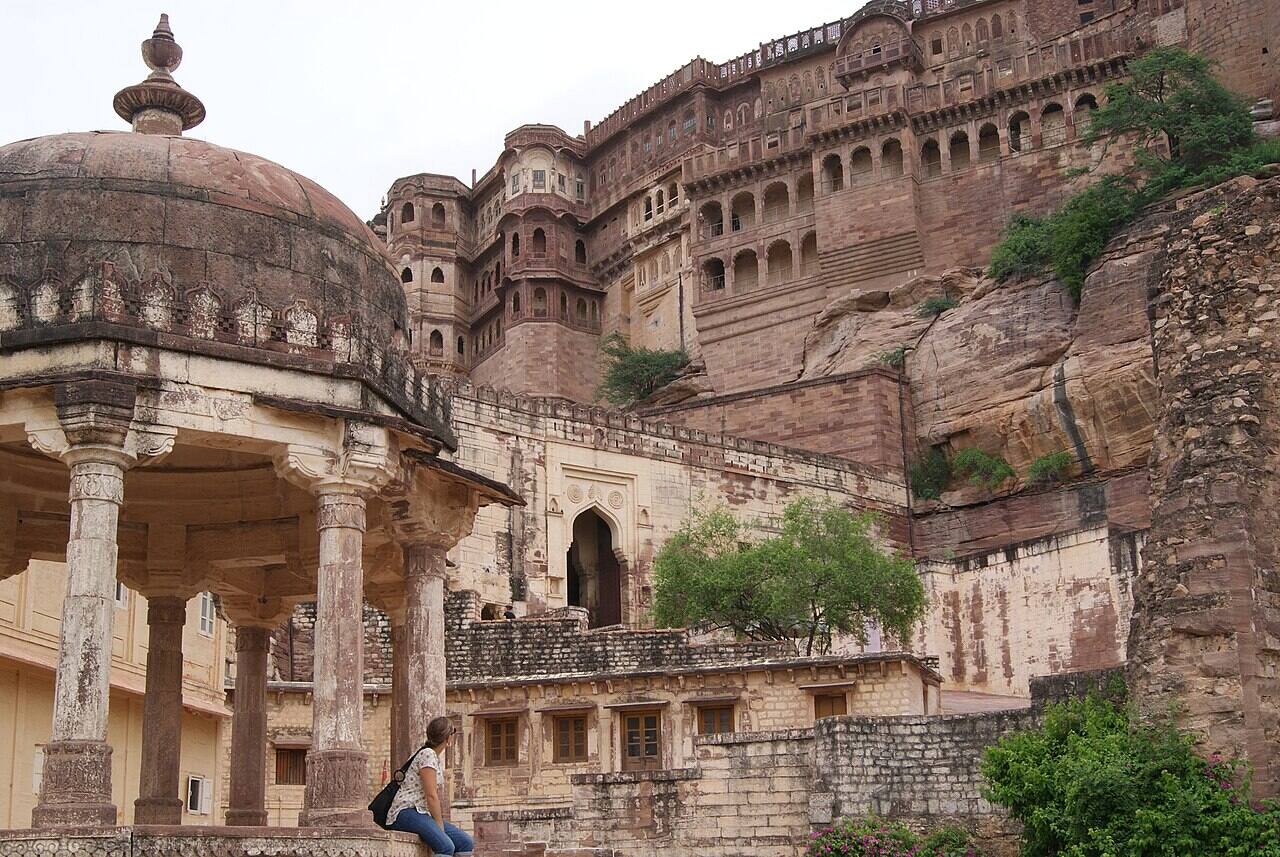
Twin holy towns in the Aravallis: a sacred Hindu lake at Pushkar and a Sufi shrine at Ajmer.
FamousPilgrimageLakeHeritageDesert
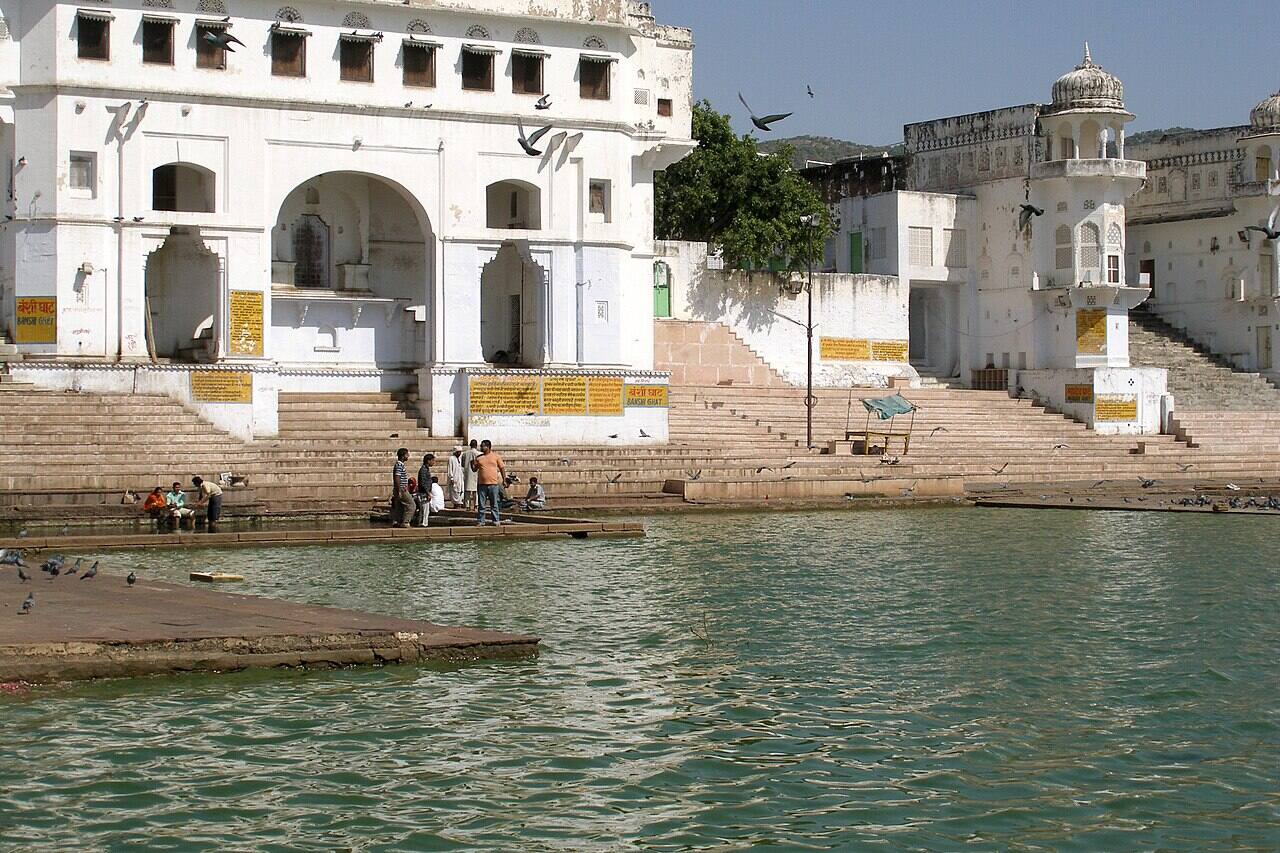
Pushkar has a sacred lake ringed by 52 bathing ghats and one of the very few temples dedicated to Brahma, while Ajmer, about 15 km away, holds the dargah of the Sufi saint Khwaja Moinuddin Chishti. The two together suit pilgrims of several faiths, families and backpackers who want a slow, walkable town with lakeside cafes and a camel fair in November.
Trip planner
Plan from your city
Photos
Pushkar Lake and its ghatsPushkar Lake at nightHills around Pushkar
Photos from Wikimedia Commons. Select a photo for its author and licence.
Best time to go
When
What to expect
October to March
The pleasant season, with temperatures of roughly 10 to 28 C. December and January are the coolest. The Pushkar Camel Fair falls around the Kartik full moon in late October or November, when rooms cost much more and need booking months ahead.
April to June
Very hot, with May and June reaching about 40 to 45 C. Few tourists. The Urs festival at the Ajmer dargah draws large crowds on its Islamic calendar dates.
July to September
Monsoon months with occasional rain and humidity.
Sights and activities
1
Pushkar Lake and ghats
A lake held sacred by Hindus, surrounded by 52 bathing ghats. It is busiest on Kartik Purnima.
Distance
In the centre of Pushkar
Entry
Free. Priests at the ghats offer a puja for about 100 to 500 rupees; agree the amount first.
An artificial lake made in the 12th century, with the Daulat Bagh gardens beside it and boating on the water. Evenings before sunset are the best time.
Buses run from Jaipur to Ajmer every few minutes (about 2 hours 45 minutes), and direct buses reach Ajmer from Delhi and Ahmedabad. Pushkar is a further 15 km by road over a low hill pass.
By train
Ajmer Junction is the nearest station, about 11 to 15 km from Pushkar, with frequent trains from Jaipur (about 1 hour 40 minutes) and Delhi (about 7 hours).
By air
Kishangarh Airport near Ajmer has limited flights; Jaipur International Airport, about 145 to 150 km from Pushkar, is the nearest major airport.
Where to base yourself
Stay in Pushkar near the lake and market, which is compact and walkable, and visit Ajmer as a day trip.
Getting around
Pushkar is small enough to cover on foot, including the lake, the market and the Brahma Temple.
State and private buses run between Ajmer and Pushkar many times a day for about 22 to 70 rupees.
Shared jeeps and shared taxis on the Ajmer to Pushkar road cost about 30 to 150 rupees a seat.
An auto-rickshaw between Ajmer and Pushkar costs about 250 to 350 rupees, though one source quotes up to 600.
A private taxi between the two towns costs about 600 to 900 rupees one way.
A full-day cab covering the sights of both towns costs about 2,500 rupees for a sedan and 3,500 for a larger car.
Scooters and motorbikes can be rented for about 500 to 700 rupees a day.
Often combined with
Places people usually visit on the same trip, and how long it takes to get between them.
Heritage properties and spa resorts on the edge of Pushkar
₹8,000 to ₹15,000
Food
Pushkar has Rajasthani thali places and many traveller cafes around the lake and market. In Ajmer, the Dargah Bazaar and Naya Bazaar are the places for street food, sweets and Mughlai dishes such as biryani.
Try these
Malpua (sweet fried pancake, a Pushkar speciality)
Dal bati churma (baked wheat balls with lentils and sweet crumble)
Lapsi (sweet broken-wheat dish)
Kadhi kachori (fried pastry with yoghurt gravy, an Ajmer breakfast)
Sohan halwa (dense sweet sold around the Ajmer dargah)
Lassi (sweet curd drink)
Pushkar is entirely vegetarian: meat, fish and eggs are not served, and alcohol is prohibited. Vegetarian food is easy to find in Ajmer too.
Daily costs
Budget level
Stay per room
Food per person
Local transport
Budget
₹900
₹500
₹100 per person
Mid-range
₹3,000
₹1,000
₹2,500 per vehicle
Luxury
₹12,000
₹2,000
₹3,500 per vehicle
Per day. Travel to and from your city is added in the planner above.
Permits and documents
No permits were mentioned by any source consulted. Carry a photo ID for hotel check-in.
Safety
By day
Both towns are busy pilgrim centres. Watch your valuables in the crowds at the dargah and the ghats, decline unofficial guides, and settle the price of any ritual or blessing before it starts.
At night
Avoid travelling the Ajmer to Pushkar road late at night, as lighting outside Pushkar is poor.
Solo women
Dress modestly, with shoulders and knees covered, as expected in both towns.
Roads
The highway from Ajmer is smooth, with a winding hilly stretch just before Pushkar.
Emergency numbers
112 (all emergencies)
Practical
Mobile network
All the main networks (Jio, Airtel, Vi and BSNL) work in town. One source rates internet availability in Pushkar as average.
ATMs and cash
ATMs exist in Pushkar but can be crowded, so carry some cash.
Fuel
There are several petrol pumps in and around town.
Medical
Hospitals are easy to find across the city. In an emergency dial 112, or 108 for an ambulance in most states. Ajmer, 15 km away, is the district headquarters and the larger city.