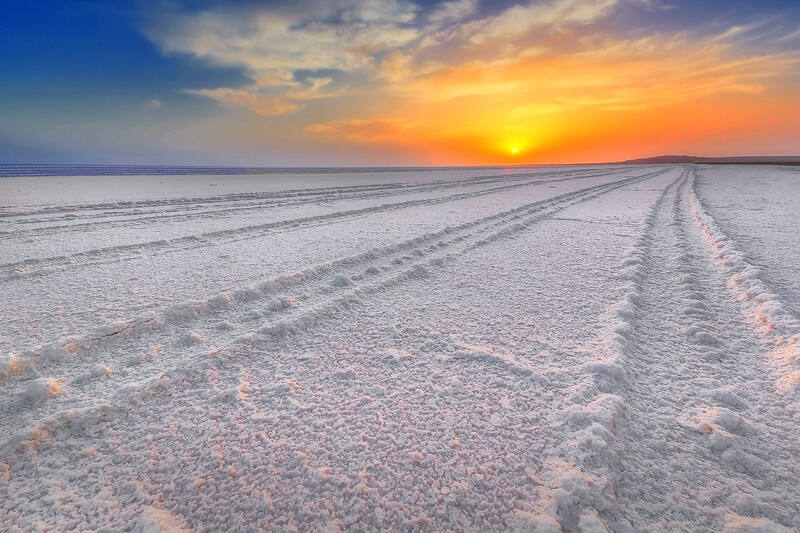
A vast seasonal salt desert in Kutch that dries into a white plain each winter.
FamousDesertHeritageVillage
The Great Rann covers about 7,500 sq km and sets into a hard white sheet of salt from about November to March. People come for sunrise, sunset and full-moon walks on the salt at Dhordo, the Rann Utsav festival, craft villages and the Harappan city of Dholavira. It suits families, photographers and anyone who likes road trips through open country.
Trip planner
Plan from your city
Photos
The White Rann of KutchSunset over the Rann at DhordoThe white salt desertRann of Kutch
Photos from Wikimedia Commons. Select a photo for its author and licence.
Best time to go
When
What to expect
November to February
The best time. Days are cool, about 10 to 25 degrees C, nights are cold, and the salt is dry enough to walk on from around December. Rann Utsav and the tent city run in these months.
March
The salt is still dry and the tent city runs into early March, but days start to get hot.
April to June
Very hot, with temperatures that can reach about 45 degrees C. Not a good time to visit.
July to October
Monsoon water floods the Rann and turns it into a shallow wetland. The white desert cannot be walked on, and some water can remain until December.
Sights and activities
1
White Rann at Dhordo
The main viewing area of the salt desert, beside Dhordo village, which was named a Best Tourism Village by the UN tourism body in 2023. Visitors walk out on the salt for sunrise, sunset and full-moon nights.
Distance
At Dhordo, about 80 km from Bhuj
Entry
Permit: 100 per adult, 50 per child aged 6 to 12; a small vehicle charge may also apply
Timings
Best at sunrise and sunset; stays open late on full-moon nights. Flooded and not walkable from about April to September.
The highest point in Kutch at 462 m, with wide views over the Great Rann. A 400-year-old Dattatreya temple at the top is known for feeding jackals around sunset.
Distance
About 48 km from Dhordo, about 90 km from Bhuj
Entry
Free
Timings
Open all day; jackal feeding is usually around 5:30 to 6 pm
A causeway of about 30 km running straight across the Rann between Khavda and Dholavira, with salt flats or water on both sides. Flamingos are seen from around November.
A Harappan city about 4,500 years old on Khadir island, a UNESCO World Heritage Site since 2021. It is known for its reservoirs, drains and a signboard in Indus script, and has a site museum.
Distance
About 10 km beyond the end of the Road to Heaven; about 88 km from Dhordo by that road
An 18th century palace with mirrored halls, Venetian glass and European-style tiles, now a museum of Kutch jewellery, arms and art. The upper floor was lost in an earthquake.
Distance
In Bhuj, about 80 km from Dhordo
Entry
About 20 to 50
Timings
9:00 to 11:45 am and 3:00 to 5:45 pm; closed Thursday
GSRTC and private buses run from Ahmedabad to Bhuj in about 9 to 10 hours. From Bhuj the road to Dhordo is fully paved and takes about 1 hour 45 minutes, passing the Bhirandiyara permit checkpost.
By train
Bhuj is the nearest railway station, about 80 to 85 km from Dhordo. Direct trains run from Ahmedabad (6 to 7 hours), Mumbai (13 to 15 hours) and Delhi (20 to 23 hours).
By air
Bhuj airport is 4 km from Bhuj town and about 85 km from Dhordo. Mumbai flights run through the year; Delhi flights are mostly seasonal, November to February.
Where to base yourself
Stay at Dhordo or nearby Hodka for the White Rann itself, or in Bhuj (about 80 km away) for cheaper rooms and more choice.
Getting around
A hired car with driver from Bhuj costs about 2,500 to 4,000 a day depending on the vehicle and season, and is the practical way to cover Kalo Dungar, the Road to Heaven and Dholavira.
A taxi from Bhuj to Dhordo and back costs about 1,500 to 3,000 depending on the car.
Buses between Bhuj and Dhordo cost about 100 to 200 but are few; there is no public bus to Kalo Dungar.
Motorbikes and scooters can be rented in Bhuj for about 800 to 1,200 a day.
Tent city packages include scheduled coach transfers from Bhuj station and airport.
Auto-rickshaws are the main way around Bhuj town; an auto from the airport to town is about 100 to 200.
On the way
Worth a stop on the drive from Bhuj, the last stretch whether you arrive by train, bus or air. Stopping needs a taxi or your own vehicle; buses do not wait. Distances are by road.
1
Bhirandiyara
Village on the Bhuj to Dhordo road known for mawa, a milk sweet. The last good stop for snacks before the White Rann.
Rann Utsav tent city tent or AC bhunga at Dhordo, for two, meals included
₹12,600 to ₹15,000
Food
Tent city and resort stays at Dhordo and Hodka normally include all meals, mostly Gujarati and Kutchi food. Bhuj has street food and restaurants. Kalo Dungar has only tea and snack stalls plus a simple free meal at the temple, and there is no food on the Road to Heaven, so carry water and snacks.
Try these
Kutchi dabeli (spiced potato filling in a bun with toppings)
Pakwan (crisp, layered, salty round snack)
Puri sak (fried bread with a vegetable curry)
Adadiya, mesuk and gulab pak (Kutchi sweets)
Mava from Khavda (milk sweet)
Resort and tent city kitchens serve Gujarati vegetarian food.
Daily costs
Budget level
Stay per room
Food per person
Local transport
Budget
₹1,000
₹400
₹300 per person
Mid-range
₹3,500
₹800
₹3,000 per vehicle
Luxury
₹13,000
₹1,000
₹4,000 per vehicle
Per day. Travel to and from your city is added in the planner above.
Permits and documents
A permit is compulsory for the White Rann at Dhordo, even if you have a resort booking. It costs 100 per adult and 50 per child aged 6 to 12, with children under 6 free. Get it online at rannpermit.gujarat.gov.in or at the Bhirandiyara checkpost, about 55 km from Bhuj, where the office opens around 10 am. Carry a photo ID in original and a copy; drivers need the vehicle papers and licence. ID is also checked at the army post for Kalo Dungar.
Safety
By day
The area is considered very safe, with BSF and police present. The sun and glare off the salt are harsh between noon and 4 pm, so carry water, sunscreen and sunglasses.
At night
Do not walk far out on the salt flats alone after dark. Winter nights are cold and windy, so take warm layers.
Solo women
No specific advice was found online. The viewing area is policed and busy with families in season; arranging return transport before sunset is sensible since buses are few.
Roads
The Bhuj to Dhordo road is fully paved with light traffic. On the Road to Heaven expect strong crosswinds, drive slowly and never drive off the road onto the salt crust, as vehicles can sink.
Emergency numbers
112 (all emergencies)
Practical
Mobile network
Mobile signal drops near the border area around the Rann and is patchy or absent on the Road to Heaven and at Dholavira. Download offline maps.
ATMs and cash
For Dhordo or Hodka. Carry enough cash from Bhuj.
Fuel
Fill up in Bhuj or Khavda. There are no pumps on the Road to Heaven.
Medical
Bhuj, about 80 km from Dhordo, is the nearest city.
Easy with a car. The salt flat is level, camel carts or buses take visitors out to the viewing area, and some tent city tents offer a senior discount. Avoid the midday heat.
Children
Suitable for children. Children under 6 need no permit fee. Drives between sights are long, so plan breaks.
Wheelchair users
The salt surface is flat but uneven and can be soft, and facilities at the viewing area are basic.
Unless a sight is described as accessible, assume it is not step-free.
Culture and responsible travel
Dhordo and Hodka are living villages known for mud craft and Mutwa embroidery; ask before photographing people or entering homes.
Buy crafts such as embroidery, Rogan art from Nirona and weaving from Bhujodi directly from the artisans.
Photography is not allowed towards the border, near India Bridge and at army posts around Kalo Dungar.
Keep food packed away at Kalo Dungar, where langurs can be aggressive, and do not disturb the jackals.
Carry your litter back from the salt flats and do not drive on the salt.
What to pack
Photo ID (Aadhaar, passport or driving licence); hotels and permits ask for it
Printed copies of your permit, with a few passport-size photos
A scarf against sand and sun, sunglasses, and a warm layer for desert nights in winter
Some cash in small notes for autos, stalls and tips
Your regular medicines, plus basics for stomach upsets, headaches and cuts