A ruined Afghan fortress city on a Vindhya plateau, at its best when the monsoon turns it green.
Lesser-knownHeritageVillage
Mandu is a whole abandoned city rather than a single monument: a plateau ringed by a fortified wall, scattered with Afghan palaces, mosques and tombs from the fifteenth and sixteenth centuries. Hoshang Shah's tomb is the earliest marble tomb in India and is said to have been studied by the builders of the Taj Mahal. Because it sits two to three hours from Indore and has no railway of its own, it stays quiet even in season, and in the monsoon the plateau turns green and the old tanks fill.
Trip planner
Plan from your city
Photos
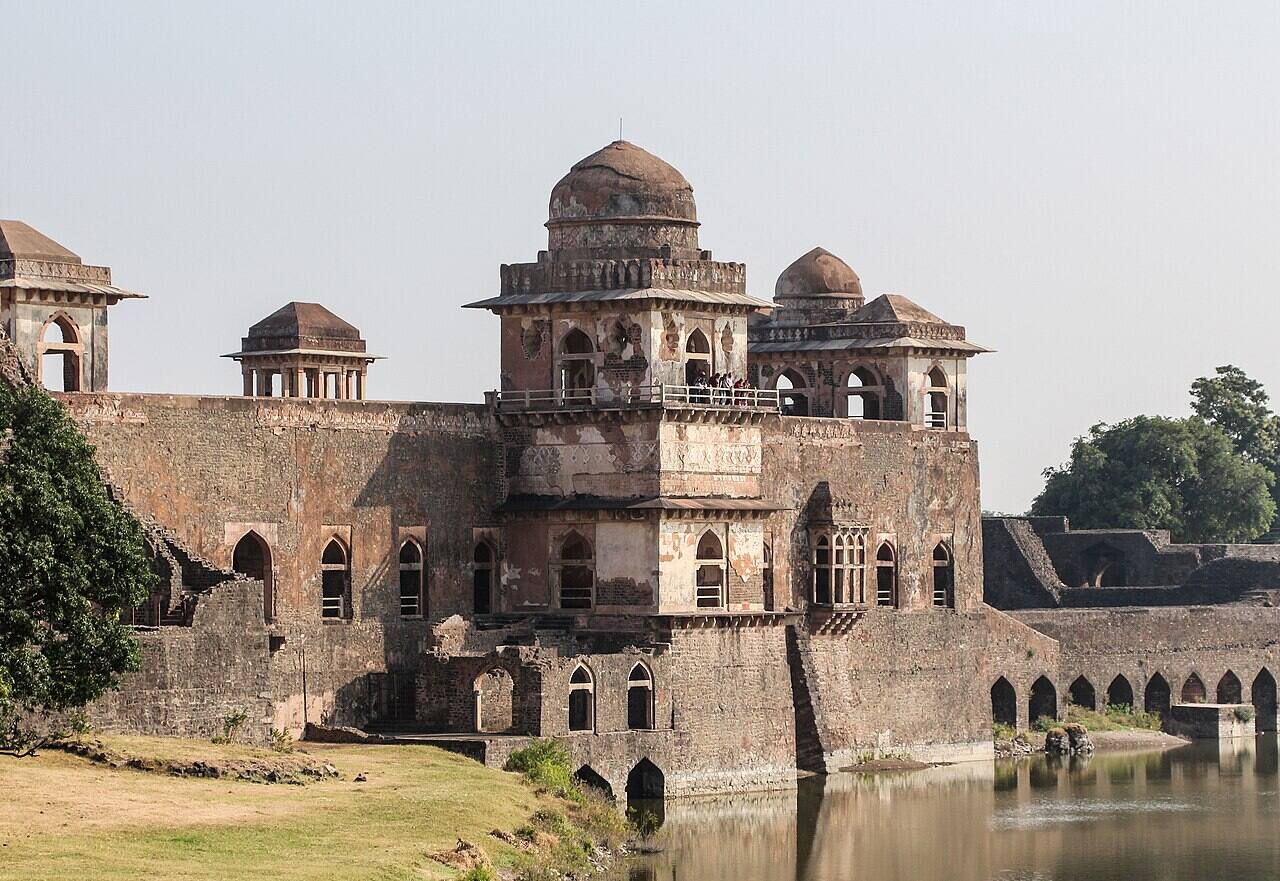
Jahaz Mahal, the ship palace between two tanksRupmati Pavilion, on the edge of the plateauHoshang Shah’s tomb, in marbleArcades of the Jahaz Mahal
Photos from Wikimedia Commons. Select a photo for its author and licence.
Best time to go
When
What to expect
July to September
The monsoon is the season Mandu is known for. The plateau is green, the tanks and waterfalls fill, and the ruins are at their most atmospheric. Expect rain and slippery stone.
October to February
Dry, clear and comfortable for long days of walking between monuments. Winter mornings on the plateau are cold.
March to June
Hot and dusty, with daytime temperatures that make walking the monument groups uncomfortable by late morning.
Sights and activities
1
Jahaz Mahal
The ship palace, a long narrow two-storey pavilion built between the Munj and Kapur tanks so that it appears to float. Part of the Royal Enclave, the main monument group.
Distance
In the Royal Enclave, at the centre of the village.
Entry
Combined Royal Enclave ticket. Archaeological Survey of India ticketed monument: Rs 15 for Indian, SAARC, BIMSTEC and OCI visitors and Rs 200 for other nationals under the notification in force from 1 April 2016. Later revisions may apply, so check at the gate.
India's earliest marble tomb, completed in the fifteenth century, with a dome, marble latticework and a courtyard. Tradition holds that Shah Jahan sent his architects to study it.
Distance
Beside the Jama Masjid, about 1 km from the Royal Enclave.
A hilltop pavilion at the southern edge of the plateau, built as an observation post and later linked to the story of Rani Rupmati and Baz Bahadur. It looks down about 300 m to the Nimar plain and the Narmada beyond.
Distance
About 6 km south of the village.
Entry
Sold with the Rewa Kund group
Timings
About sunrise to sunset. Sunset is the usual time to go.
Buses run from Indore to Dhar frequently, and from Dhar to Mandu through the day; direct Indore to Mandu services are fewer. The last stretch climbs the plateau through the Delhi Darwaza gateway.
By train
Mandu has no railway. Indore (INDB), about 95 to 100 km away, is the usual railhead and has direct trains from Delhi in about 12 to 17 hours. Ratlam Junction, about 125 km, is the other option and sits on the Delhi-Mumbai main line.
By air
Devi Ahilyabai Holkar Airport at Indore is the nearest, about 100 km away, roughly 2.5 to 3 hours by road.
Where to base yourself
Most visitors stay in Mandu village, within walking distance of the Jahaz Mahal group. There is also accommodation in Dhar, 35 km away, and in Indore for those making a day trip.
Getting around
The Royal Enclave and the Jama Masjid group are in the village and can be walked between.
The Rewa Kund group and Rupmati's pavilion are 5 to 6 km south; an autorickshaw or hired car is the practical way to reach them.
Bicycles can be hired in the village and suit the flat plateau roads.
A half-day taxi covering the outlying groups is offered locally.
Often combined with
Places people usually visit on the same trip, and how long it takes to get between them.
Madhya Pradesh Tourism basic rooms and village guesthouses
₹800 to ₹2,000
Mid-range
Madhya Pradesh Tourism resorts such as Malwa Resort and Malwa Retreat, and mid-range hotels
₹2,500 to ₹4,500
Luxury
Heritage-style and boutique stays on the plateau
₹6,000 to ₹12,000
Food
Eating in Mandu is simple: a handful of dhabas around the Royal Enclave and the restaurants attached to the state tourism properties. There is little open late.
Try these
Dal bafla, the Malwa version of baati, served with ghee and dal
Poha jalebi for breakfast, the standard Malwa morning meal
Bhutte ki kees, grated corn cooked with milk and spices
Mawa bati, a sweet from the Malwa region
Custard apple in season after the monsoon
Vegetarian food is the default and easy to find.
Daily costs
Budget level
Stay per room
Food per person
Local transport
Budget
₹900
₹400
₹100 per person
Mid-range
₹3,200
₹900
₹500 per vehicle
Luxury
₹7,500
₹1,800
₹1,500 per vehicle
Per day. Travel to and from your city is added in the planner above.
Permits and documents
No permits are needed. Buy the Archaeological Survey of India tickets at the monument groups; one ticket usually covers a group rather than a single building. Carry photo ID for hotel check-in.
Safety
By day
Mandu is a quiet village and the monuments are open and well visited in season. The ruins have unfenced drops, open tank edges and uneven stone; watch your footing, especially in the monsoon when the stone is slippery.
At night
The village is small and goes quiet early. The outlying monument groups are unlit and should not be visited after dark.
Solo women
No specific safety information was found. Usual care applies: stay in well-reviewed places and avoid the outlying ruins alone at dusk.
Roads
The Indore to Mandu road is a state highway with a plateau climb at the end. Avoid driving the ghat section after dark in the monsoon.
Emergency numbers
112 (all emergencies), 108 (ambulance)
Practical
Mobile network
Coverage on the plateau is reported to be patchy away from the village.
ATMs and cash
There are few machines in the village. Withdraw in Dhar or Indore.
Fuel
Fill up in Dhar, 35 km away.
Medical
Basic facilities in the village; the district hospital is in Dhar, and full hospitals are in Indore.