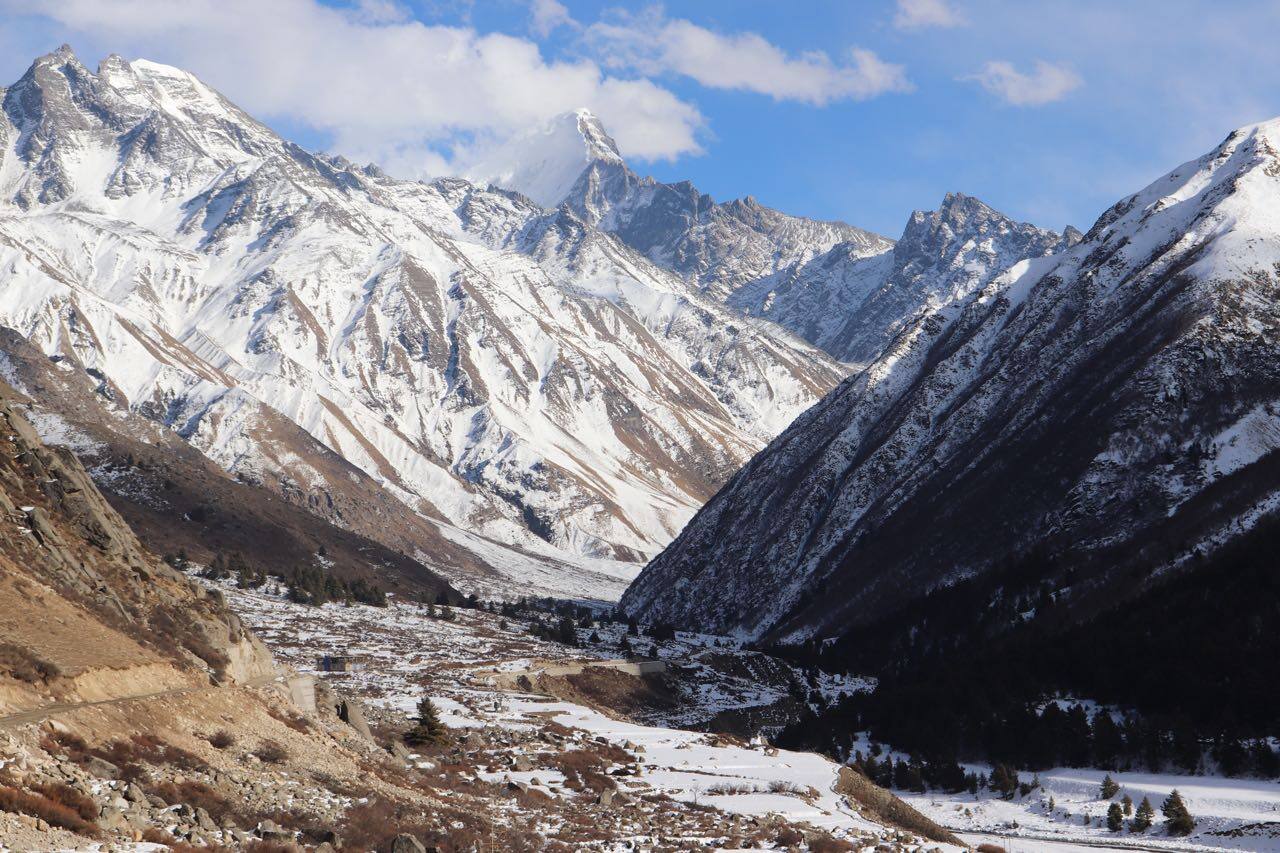
A small Spiti River village built around a Buddhist monastery founded in 996 CE.
Lesser-knownHeritageVillagePilgrimage
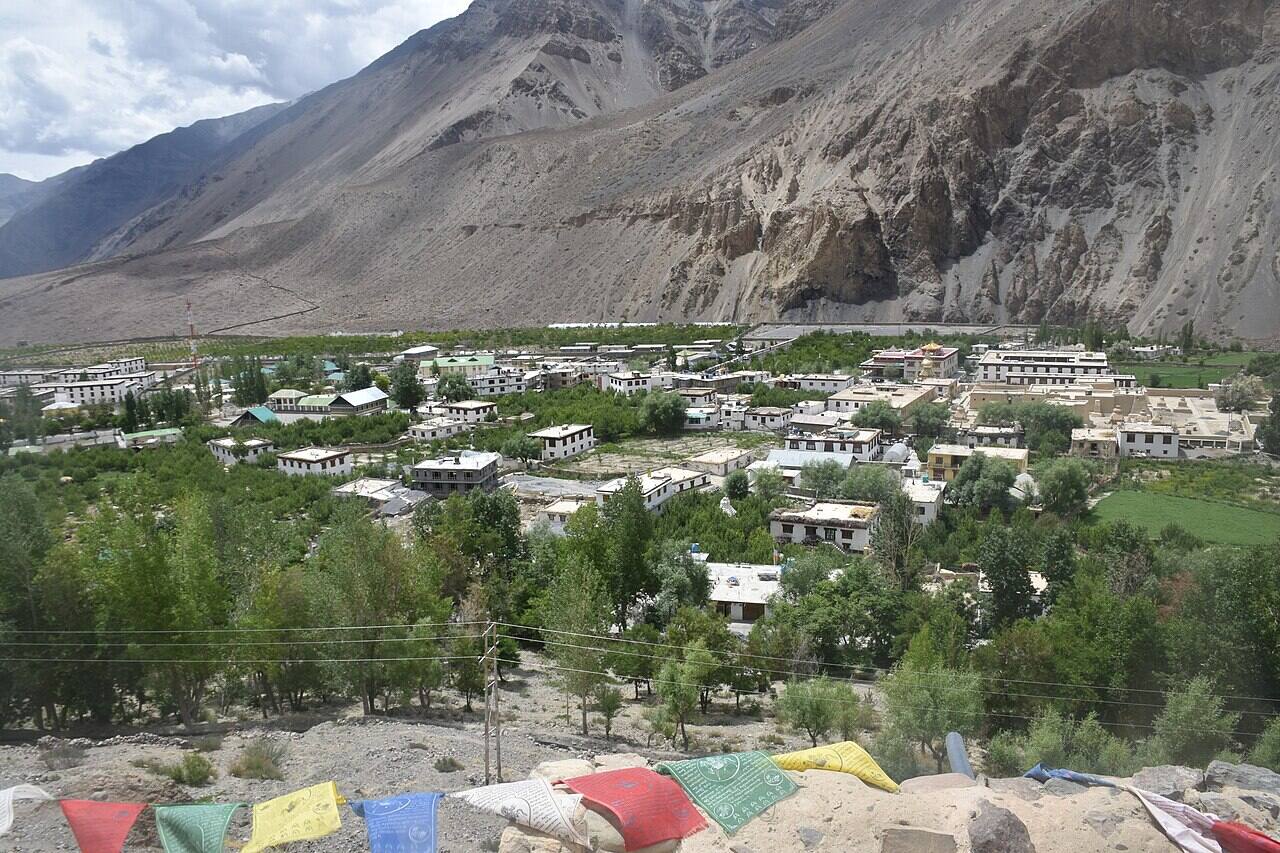
Tabo holds one of the oldest working Buddhist monasteries in the Himalayas, with old wall paintings, scriptures and meditation caves in the cliff above it. The village is quiet and small, with clear night skies and apple orchards. It suits travellers on the Shimla to Kaza road who like history and slow village stays more than activity.
Trip planner
Plan from your city
Photos
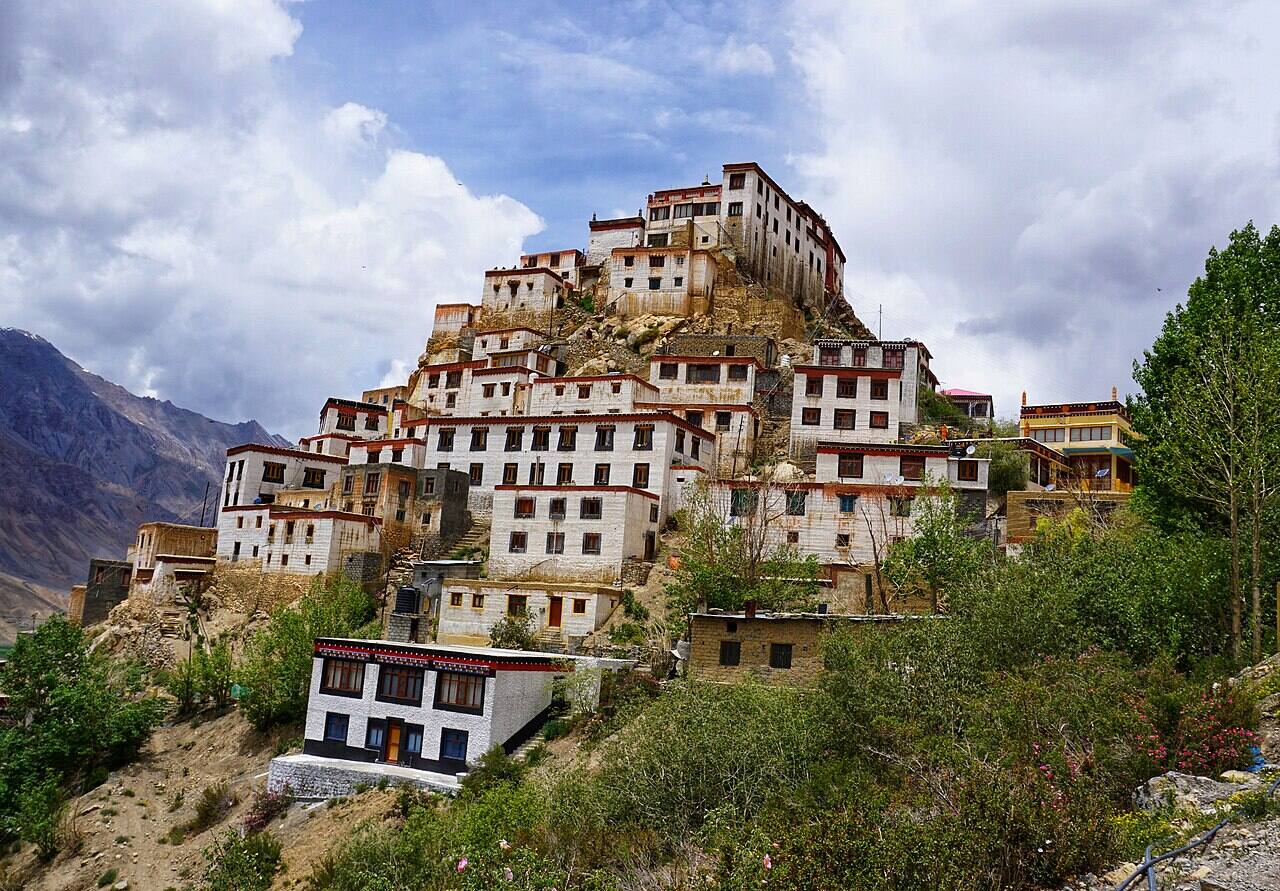
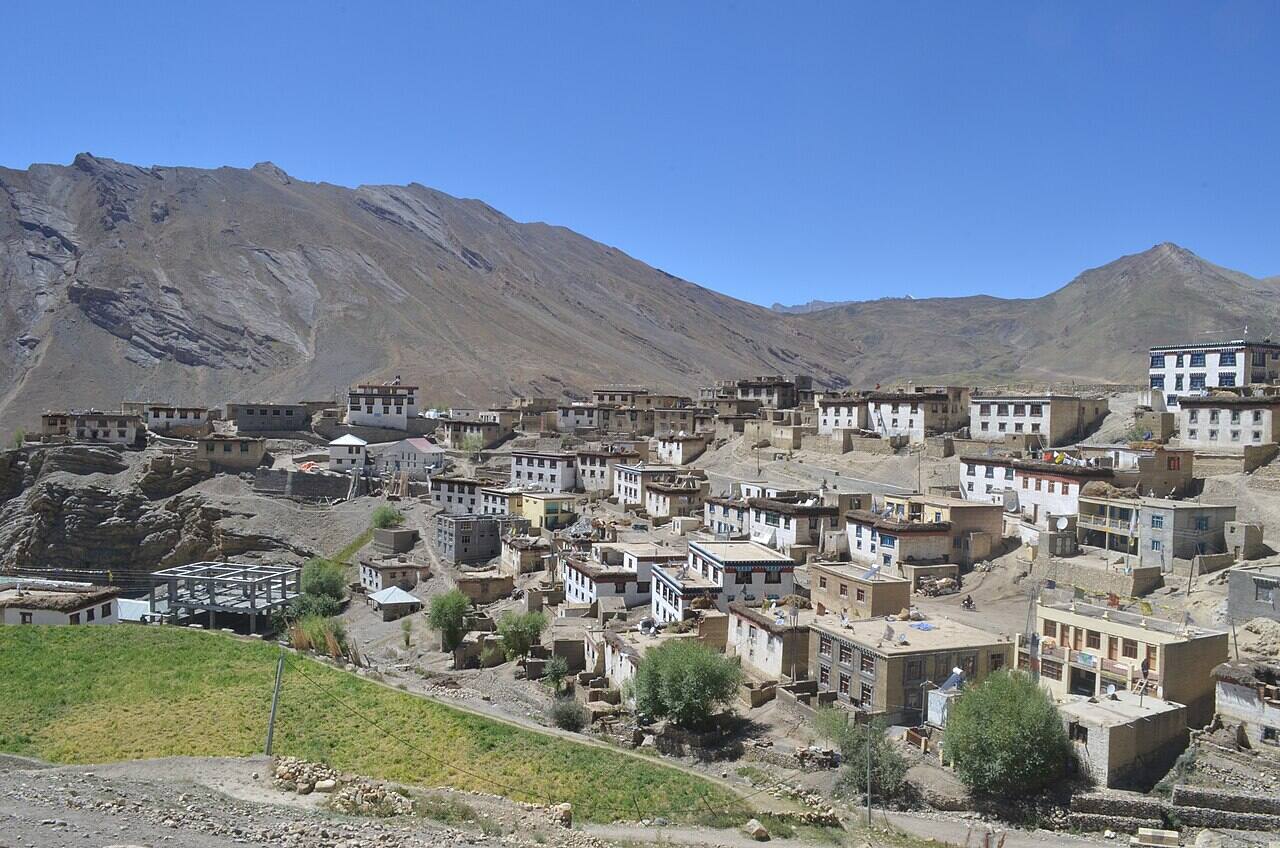
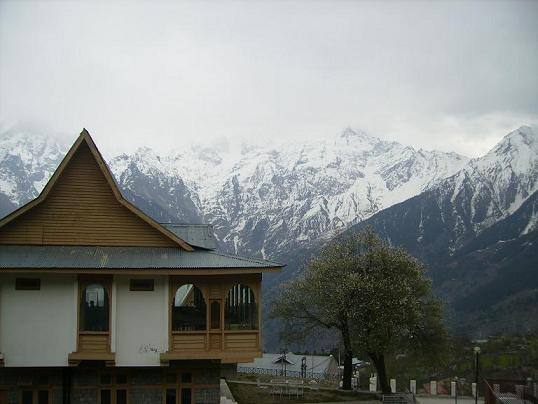
Tabo MonasteryTabo villageBridge at Tabo
Photos from Wikimedia Commons. Select a photo for its author and licence.
Best time to go
When
What to expect
May to June
Roads from Shimla are reliable, days are sunny and the sun is strong. One of the preferred times to visit.
July to August
Spiti lies in a rain shadow and gets little rain, but the approach road through Shimla and Kinnaur can be affected by monsoon rain.
September to October
Clear and cool, and a preferred time. The Manali to Kaza road usually closes by early October.
November to April
Very cold, with winter temperatures reported down to about minus 20 C. The Shimla road stays open in principle but can close for days after snow. Not advised for a first visit.
Sights and activities
1
Tabo Monastery
Monastery complex founded in 996 CE, with several temples and chapels, old wall paintings, statues and scriptures. About 50 to 60 monks live here. Photography is not allowed inside.
Distance
In the village
Timings
Reported as 6 am to 7 pm daily, starting with morning chants
Old meditation caves cut into the cliff above the monastery, once used by monks as living and retreat spaces. They give a wide view over the village and the Spiti River.
An old monastery on a high cliff above the meeting point of the Spiti and Pin rivers, at about 3,894 m. The old building is fragile and only about 20 people may enter at once.
Distance
About 25 km from Tabo, the last 7 km uphill off the highway
The naturally preserved body of a monk, believed to be Sangha Tenzin and dated to about 1475, kept seated in a glass case in a small shrine in Gue village.
Distance
About 35 to 40 km from Tabo, the last 8 to 9 km on a steep side road from the highway
Timings
Kept locked; ask in the village for the caretaker to open it
A village at about 3,625 m in Kinnaur with a small lake ringed by willow and poplar trees and an 11th century monastery. It lies on the road between Reckong Peo and Tabo.
Tabo is on the Reckong Peo to Kaza highway, about 150 km from Reckong Peo and about 50 km from Kaza. Travel from Chandigarh or Shimla to Reckong Peo, then take the daily HRTC bus towards Kaza, which stops at Tabo. The Shimla side is open most of the year. The Manali side over Kunzum Pass is open only from about June to early October. Tour operators also run organised trips with transport included from Delhi, Chandigarh, Shimla and Manali; see Guided trips and packages below.
By train
No railway nearby. Shimla is the nearest station named by travel sites, about 377 km away by road.
By air
Bhuntar (Kullu) and Chandigarh are the airports named by travel sites; Chandigarh is the practical one for the Shimla route.
Where to base yourself
Stay in Tabo village itself, within walking distance of the monastery, in a homestay, guest house or the monastery guest rooms.
Getting around
The village and the monastery, library and caves are all covered on foot.
The daily Reckong Peo to Kaza bus passes through Tabo and can be used for Kaza or the Dhankar turn-off; The return bus leaves Kaza at about 7 am.
A hired taxi is needed for Dhankar, Gue and Pin Valley in one day. A 2020 guide put a private taxi for the whole circuit at about 2,000 to 3,000 rupees a day.
On the way
Worth a stop on the drive from Shimla, the last stretch whether you arrive by train, bus or air. Stopping needs a taxi or your own vehicle; buses do not wait. Distances are by road.
1
Narkanda
Apple-growing ridge at about 2,700 m with wide Himalayan views. Hatu Peak and the Hatu Mata temple are 7 to 8 km up a side road. Skiing in winter.
No government-run tour to Tabo was found; the HPTDC site shows only its hotels, not a Spiti package. Private operators include Tabo as an overnight stop on Spiti Valley road circuits of 7 to 10 days, starting from Delhi, Shimla, Chandigarh or Manali, with summer departures roughly May to October and some winter departures via Shimla. Prices found ranged from about Rs 11,600 to Rs 39,000 per person, depending on group size, vehicle and starting city.
Group road trip through Kinnaur and Spiti with a night in Tabo
Delhi or Shimla
9 days / 8 nights
₹15,999 per person Shimla to Shimla, triple or quad sharing; Delhi to Delhi is Rs 17,999 on the same sharing. As listed on the operator's site on 2026-10-04.
Overnight bus Delhi to Shimla and back (Delhi option), tempo traveller on the mountain route, 6 nights in hotels and homestays, 6 breakfasts and 6 dinners, trip leader, inner line permits for Indian nationals, oxygen cylinder and first aid kit (as stated on the page)
₹17,499 per person Delhi to Delhi, triple occupancy, 5% GST extra, Indian nationals only; double occupancy is Rs 18,999. As listed on the operator's site on 2026-10-04.
All transfers and sightseeing by AC vehicle, tolls, parking and permit charges, hotel stay, breakfast and dinner; monastery and monument entry fees are not included (as stated on the page)
Package tour of Spiti with a day excursion to Tabo, Dhankar and Pin Valley
Manali
7 days / 6 nights
₹11,590 per person Budget category, per person in a group of 15; rises to Rs 15,050 for 6 people, Rs 19,250 for 4 and Rs 31,000 for 2. As listed on the operator's site on 2026-10-04.
All transport, sightseeing as per itinerary, hotel stay, breakfast and dinner, taxes; air or rail fares to the start point and entrance fees are not included (as stated on the page)
Small-group vehicle tour of Kinnaur and Spiti with a night in Tabo
Chandigarh
10 days / 9 nights
₹38,950 per person Per person in a group of six, for 7 July to 30 October; May and June prices differ. As listed on the operator's site on 2026-10-04.
Non-AC Toyota Innova shared by up to six people, fuel and tolls, English-speaking local driver-guide, hotels, homestays and a camp at Chandratal, breakfast and dinner at most stops (as stated on the page)
Checked online on 2026-10-04. A listing here is not a recommendation; we have no tie-up with these operators. Before you pay, check that the operator and its website are genuine, and confirm dates, price and what is included.
Where to stay
Budget level
Type
Price per night
Budget
Monastery guest rooms and simple homestays
₹500 to ₹1,200
Mid-range
Guest houses, homestays and small hotels
₹1,500 to ₹3,000
Luxury
Best hotels in the village
₹6,000 to ₹6,950
Food
Food is basic. There are a few small restaurants, such as Tiger's Den, Kunzum Top and The Third Eye, and homestays cook simple meals. A dhaba meal in Spiti was reported at up to about 100 rupees in 2020.
Try these
Thukpa (noodle soup with vegetables or meat)
Thenthuk (Tibetan soup with hand-pulled noodle pieces)
Momo (steamed dumplings with vegetable or meat filling)
Local apples in season
Vegetarian food is easy to find. Vegetable momo, thukpa and simple dal, rice and vegetable meals are generally available.
Daily costs
Budget level
Stay per room
Food per person
Local transport
Budget
₹500
₹300
₹100 per person
Mid-range
₹1,800
₹600
₹2,500 per vehicle
Luxury
₹6,950
₹1,000
₹3,000 per vehicle
Per day. Travel to and from your city is added in the planner above.
Permits and documents
Indian citizens need no permit; carry a government photo ID such as Aadhaar for checkposts. Foreign nationals need an Inner Line Permit for the stretch between Reckong Peo and Kaza, which includes Tabo. It is issued at offices in Shimla, Reckong Peo and Kaza, is officially free and is valid for two weeks.
Safety
By day
A quiet village with little to worry about. The altitude of about 3,280 m is the main risk: rest on the first day, drink water and climb slowly. The sun is strong.
At night
The village is dark and very cold after sunset. Carry a torch and warm layers.
Solo women
It is a small monastery village where travellers stay in family homestays; Normal care applies.
Roads
The Shimla to Kaza road is long and takes at least two days. It can be blocked by snow in January to March and by landslides in the rains. The Manali to Kaza road is very rough and open only from about June to early October.
Emergency numbers
112 (all emergencies)
Practical
Mobile network
BSNL is the operator reported to work in Tabo, with patchy signal and little or no data. Airtel and Jio were reported in Kaza.
ATMs and cash
No ATM confirmed in Tabo. Kaza, about 50 km away, has banks and ATMs but they can run out of cash. Carry enough cash.
Fuel
No petrol pump in Tabo. The nearest is the Indian Oil pump at Kaza, about 50 km away.
Medical
Tabo has a primary health centre for basic care. The main hospital in Spiti is at Kaza, about 50 km away.
The village is flat and the monastery is easy to walk around, but the altitude and the long two-day road journey are demanding. Check with a doctor first and allow time to acclimatise.
Children
Possible for older children who cope with long drives. Altitude sickness is a risk, and medical care is basic.
Wheelchair users
The caves and Dhankar involve steep, loose paths and are not suitable.
Unless a sight is described as accessible, assume it is not step-free.
Culture and responsible travel
Tabo is a working monastery. Dress modestly, keep quiet in the temples and follow the monks' directions.
Photography is not allowed inside the monastery temples.
The old wall paintings are fragile. Do not touch them.
The Chakhar festival is held at the monastery every three years, in September or October.
Water and power are limited in the cold desert. Use them sparingly and carry your rubbish out.
What to pack
Photo ID (Aadhaar, passport or driving licence); hotels and permits ask for it
Printed copies of your permit, with a few passport-size photos
Thermals, a down or fleece jacket, gloves and a warm cap, even in summer
Sunglasses, high-SPF sunscreen and lip balm: the sun is harsh at altitude
Ask your doctor before you go about altitude sickness and what to carry for it
A rain jacket or umbrella and quick-dry clothes
Clothes that cover shoulders and knees, and socks for hot stone floors where shoes come off. Some temples do not allow phones or bags, so carry little
Enough cash for the whole stay, a power bank and offline maps
Your regular medicines, plus basics for stomach upsets, headaches and cuts