Maharashtra's capital on the Arabian Sea, with colonial landmarks, sea promenades and rock-cut caves.
FamousCityHeritageBeach
Mumbai is India's commercial and film capital, built on what were once seven islands. It has three UNESCO World Heritage Sites, a long sea-facing promenade, well-known street food and a national park inside the city limits. It suits first-time visitors to India, food lovers and anyone who enjoys big cities.
Trip planner
Plan from your city
Photos
Gateway of India on the Mumbai waterfrontChhatrapati Shivaji Maharaj TerminusCSMT lit up at nightInside Chhatrapati Shivaji Maharaj Terminus
Photos from Wikimedia Commons. Select a photo for its author and licence.
Best time to go
When
What to expect
October to February
The best time. Days are about 20 to 30 C with low humidity and little rain. December and January are coolest and hotel prices are highest.
March to May
Hot and humid, with temperatures reaching the mid to high 30s C. Fewer visitors and lower room rates.
June to September
Monsoon. Rain is heavy and can disrupt trains, roads and ferries. The national park is green but rocks and trails are slippery.
Sights and activities
1
Gateway of India
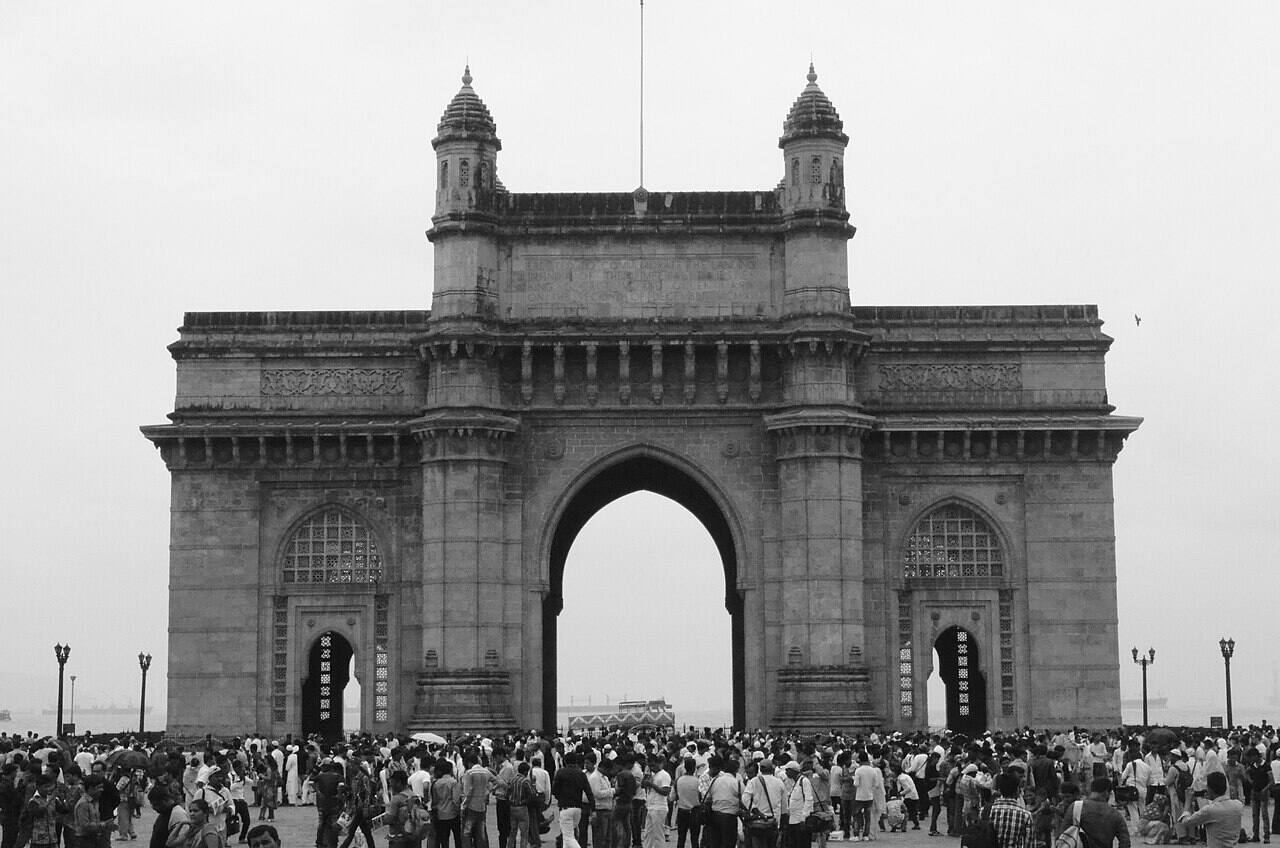
A 26 metre high stone arch on the Apollo Bunder waterfront, built between 1915 and 1924 in the Indo-Saracenic style. Ferries to Elephanta leave from here.
Distance
In Colaba, about 2 km from both CSMT and Churchgate stations.
Rock-cut cave temples on an island in the harbour, carved between the 5th and 8th centuries and listed by UNESCO. Reached by a ferry of about one hour from the Gateway of India.
Distance
About 10 km by sea from the Gateway of India.
Entry
40 rupees for Indians, 600 rupees for foreigners, plus a 10 rupee village fee. Ferry about 200 to 280 rupees return is extra.
Timings
9:00 am to 5:00 pm, closed on Mondays. First ferry about 9:00 am, last ferry out about 2:00 pm, last ferry back about 5:00 pm.
A working railway station in ornate Victorian Gothic style, formerly Victoria Terminus, and a UNESCO World Heritage Site. Most visitors view it from outside, and it is lit up at night.
A curved 3.5 km seafront promenade from Nariman Point to Girgaum Chowpatty, called the Queen's Necklace for its line of lights at night. Best at sunset.
Distance
Near Churchgate and Marine Lines stations, about 2 km from the Gateway of India.
A white shrine and mosque set in the sea, reached on foot along a 640 metre causeway. The causeway goes under water at high tide, so visit at low tide.
Distance
In Worli, about 1 km from Mahalaxmi station on the Western line.
National highways link Mumbai to Pune (about 150 km) and Ahmedabad (about 525 km). MSRTC and many private operators run buses to Dadar, Borivali and other points in the city.
By train
Mumbai has several terminals; Chhatrapati Shivaji Maharaj Terminus and Mumbai Central are the main ones, and many trains also stop at Dadar.
By air
Chhatrapati Shivaji Maharaj International Airport (BOM) is in the city, about 21 km from South Mumbai.
Where to base yourself
Colaba and Fort in South Mumbai are within walking distance of the main sights; Bandra is a livelier alternative about 30 to 45 minutes away.
Getting around
Suburban local trains on the Western, Central and Harbour lines are the fastest way across the city; second class costs about 5 to 15 rupees and first class about 65 to 205 rupees. Avoid weekday rush hours, roughly 8:30 to 10:30 am and 5:30 to 8 pm.
Mumbai Metro fares are about 10 to 50 rupees depending on distance.
BEST city buses cost about 6 to 25 rupees non-AC and 20 to 60 rupees AC; routes 111 and 112 run to the Gateway of India.
Black-and-yellow taxis run on the meter from about 28 rupees for the first 1.5 km; Colaba to CSMT is about 60 to 80 rupees and Colaba to Bandra about 250 to 350 rupees.
Auto-rickshaws start at about 23 to 25 rupees for the first 1.5 km but operate only in the suburbs, north of Bandra and Sion; they are not allowed in South Mumbai.
App cabs (Uber, Ola) cost about 200 to 350 rupees from Colaba to Bandra and about 500 to 800 rupees from the airport to South Mumbai, more during surge pricing.
A prepaid taxi from the airport costs about 450 to 550 rupees to Bandra and 700 to 900 rupees to Colaba or Fort, taking 1 to 1.5 hours in traffic.
Often combined with
Places people usually visit on the same trip, and how long it takes to get between them.
3-star or 4-star hotel in Fort, Colaba, Bandra or Andheri
₹3,000 to ₹7,500
Luxury
5-star hotel, including sea-facing heritage hotels
₹10,000 to ₹36,000
Food
Street food is the city's signature. Girgaum Chowpatty at the end of Marine Drive, Crawford Market and Mohammed Ali Road are well-known eating areas. A full meal at an inexpensive restaurant is about 500 rupees and at a mid-range restaurant about 600 to 1,200 rupees. Pick busy stalls where food is cooked in front of you and drink bottled water.
Try these
Vada pav (spiced potato fritter in a bread roll, about 15 to 40 rupees)
Pav bhaji (mashed vegetable curry with buttered bread, about 100 to 150 rupees on the street)
Bhel puri (puffed rice with chutneys and chopped vegetables)
Sev puri (crisp discs topped with potato, chutney and fine gram noodles)
Pani puri (hollow crisp shells filled with spiced water)
Bombay sandwich (vegetable sandwich with green chutney, about 40 to 100 rupees)
The best-known street dishes (vada pav, pav bhaji, bhel puri, sev puri) are vegetarian.
Daily costs
Budget level
Stay per room
Food per person
Local transport
Budget
₹1,500
₹500
₹150 per person
Mid-range
₹5,000
₹1,500
₹800 per vehicle
Luxury
₹20,000
₹4,000
₹2,500 per vehicle
Per day. Travel to and from your city is added in the planner above.
Permits and documents
No permit was mentioned by any source for the sights listed. Tickets are bought at the gate; foreigners pay higher rates at Elephanta, Kanheri and the museum. Carry a photo ID.
Safety
By day
The main tourist areas are busy and generally fine by day. Watch your belongings in crowds, markets and local trains.
At night
Stay on well-lit streets and use metered taxis or app cabs rather than walking through quiet lanes late at night.
Solo women
General advice from sources is to avoid poorly lit areas at night and to use official taxis or app cabs.
Roads
Traffic is heavy and road journeys across the city often take 1 to 1.5 hours. Local trains are extremely crowded in weekday rush hours. Monsoon rain can flood roads and stop trains.
Emergency numbers
112 (all emergencies)
Practical
Mobile network
All the main networks (Jio, Airtel, Vi and BSNL) work in town.
ATMs and cash
ATMs are easy to find in town.
Fuel
There are several petrol pumps in and around town.
Medical
Hospitals are easy to find across the city. In an emergency dial 112, or 108 for an ambulance in most states.
The Gateway of India, Marine Drive and the museum are flat and easy. Elephanta needs a one-hour boat ride and a climb from the jetty, and Kanheri involves walking over rock, so both are harder.
Children
Sanjay Gandhi National Park has a safari, boating and cycle hire that suit children. Avoid local trains at rush hour with small children.
Wheelchair users
The Marine Drive promenade and the Gateway of India plaza are level. The cave sites involve steps and uneven rock.
Unless a sight is described as accessible, assume it is not step-free.
Culture and responsible travel
At Haji Ali Dargah dress conservatively, cover your head and remove footwear; photography is not allowed inside the shrine.
Marathi, Hindi and English are widely spoken.
Ganesh Chaturthi, Navaratri and Diwali are major festivals; expect crowds and road closures and be respectful of processions.
Bargaining is normal at street markets; start well below the first price.
Elephanta and Kanheri are protected monuments. Do not touch or climb on the carvings and carry your litter back.
What to pack
Photo ID (Aadhaar, passport or driving licence); hotels and permits ask for it
Sunscreen, a hat, swimwear and sandals
Some cash in small notes for autos, stalls and tips
Your regular medicines, plus basics for stomach upsets, headaches and cuts