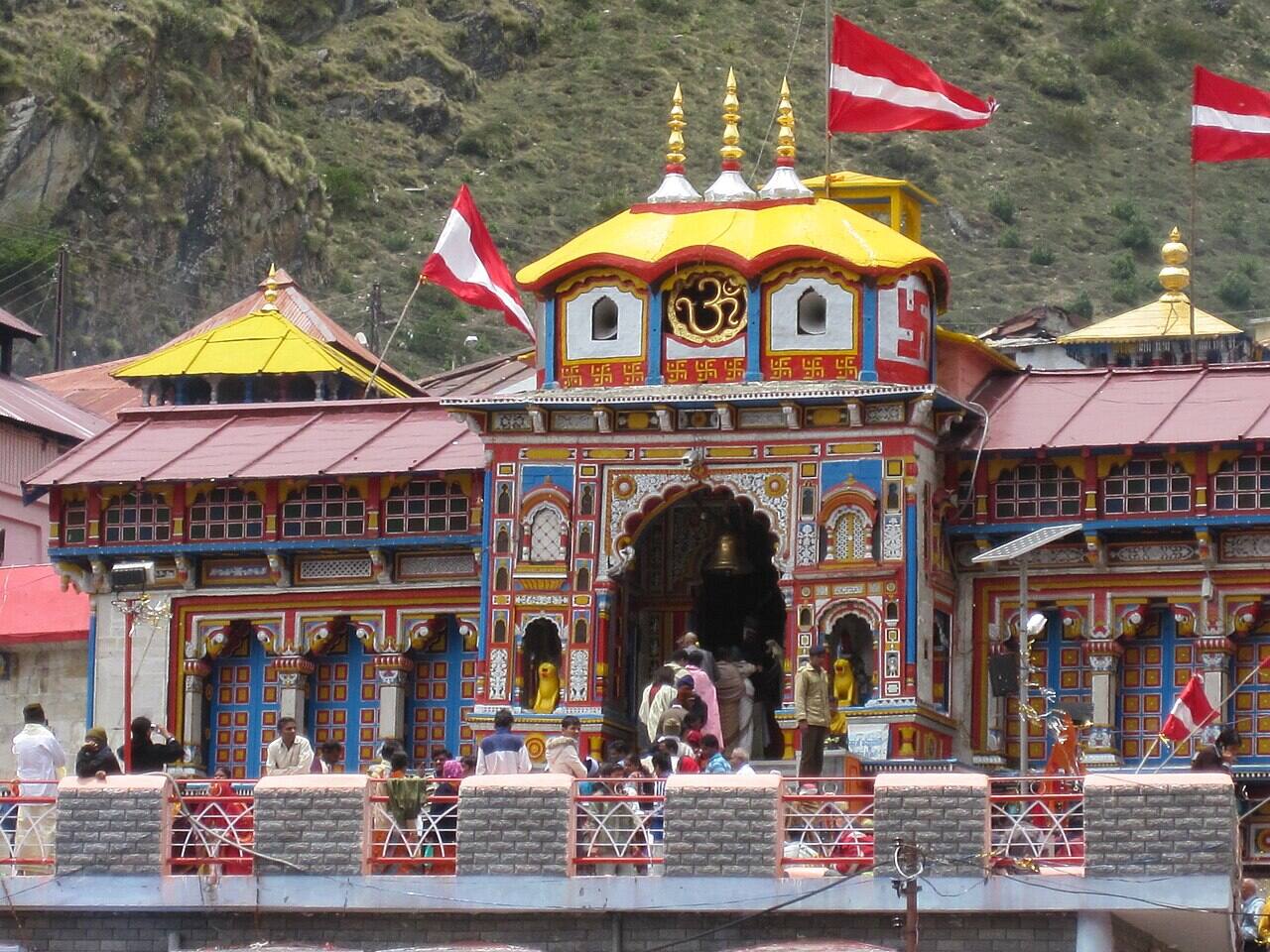
High Himalayan Vishnu shrine on the Alaknanda river, one of the Char Dham temples.
FamousPilgrimageVillageWaterfallTrek
Badrinath is one of the four Char Dham shrines and draws pilgrims to its Vishnu temple and hot spring beside the Alaknanda river. Mana village, old caves and the walk to Vasudhara Falls are close by. It suits pilgrims and families who can handle a long mountain drive and thin air at over 3,000 m.
Trip planner
Plan from your city
Photos
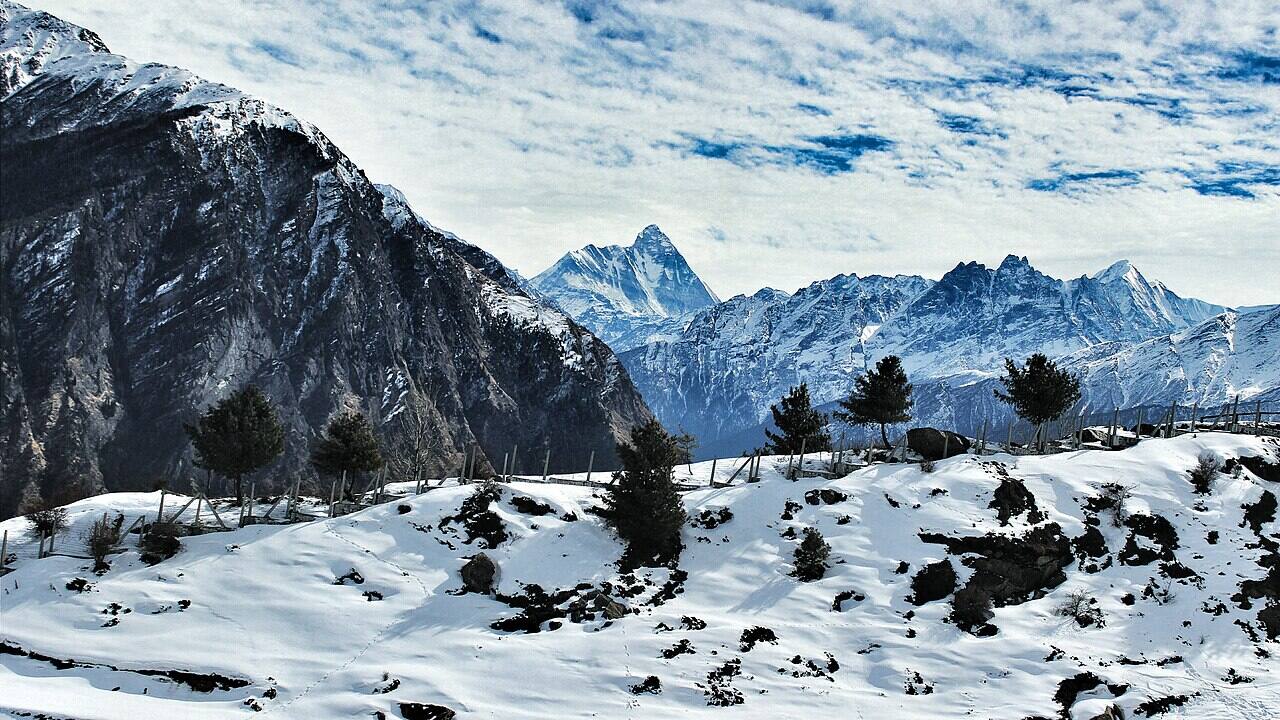
Badrinath TempleBadrinath valley along the Alaknanda riverBadrinath Temple in 2012Badrinath Temple, view towards the sanctum
Photos from Wikimedia Commons. Select a photo for its author and licence.
Best time to go
When
What to expect
Late April to June
The temple opened on 23 April in 2026. Days are about 10 to 18 C and clear, all services run, but crowds are very heavy with darshan queues of 2 to 4 hours and higher prices.
July to August
Monsoon. The valley is green and crowds are low, but heavy rain brings frequent landslides and road closures on the highway.
September to October
Clear skies, good mountain views and moderate crowds; darshan can take under an hour. Widely described as the best time overall.
November to April
The temple closes around mid November (about 13 November in 2026) and stays shut through winter. Nights fall to freezing or below before closing, and snow is possible.
Sights and activities
1
Badrinath Temple
The main shrine to Lord Vishnu, with a black stone idol seated in the lotus position and a painted entrance gate called Singhdwar. It is one of the Char Dham temples.
Distance
In the town centre
Entry
Free for general darshan; special pujas cost about 1,100 to 5,100 rupees
Timings
About 4:30 am to 1 pm and 4 pm to 9 pm, only from late April to mid November
Badrinath is on the Badrinath highway through Devprayag, Rudraprayag, Chamoli and Joshimath. Buses leave Rishikesh between about 4 and 7:30 am and take 10 to 12 hours or more. Vehicles are not allowed to move on Char Dham routes between 10 pm and 4 am. Tour operators also run organised trips with transport included from Delhi, Rishikesh and Haridwar; see Guided trips and packages below.
By train
Rishikesh is the nearest railhead, about 295 to 297 km away; Haridwar (about 320 km) has more trains.
By air
Jolly Grant Airport, Dehradun, about 314 to 317 km away, with daily flights from Delhi.
Where to base yourself
Stay in Badrinath town within walking distance of the temple; Joshimath, about 46 km lower down, is the fallback with better facilities.
Getting around
The temple, Tapt Kund and the market are all reached on foot within the town.
Mana village is about 3 km away and can be reached on foot or by vehicle in about 15 minutes.
A private taxi hired by the day starts at about 3,500 rupees.
Palki (carried chair) services for those who cannot walk cost about 1,500 to 2,500 rupees.
Vasudhara Falls and Charan Paduka can only be reached on foot.
On the way
Worth a stop on the drive from Rishikesh, the last stretch whether you arrive by train, bus or air. Stopping needs a taxi or your own vehicle; buses do not wait. Distances are by road.
1
Devprayag
Where the Bhagirathi and the Alaknanda meet and become the Ganga. It is the last of the Panch Prayag (five holy confluences). Steps lead down from the town to the sangam, with the old Raghunath temple above it.
Distance
About 70 km from Rishikesh, 220 km before Badrinath
Temple of Dhari Devi, worshipped as the guardian goddess of the Char Dham, set on the Alaknanda between Srinagar and Rudraprayag. The shrine was raised onto a platform above the river in 2013 because of the dam reservoir. A short walk down from the highway.
Distance
About 110 km from Rishikesh, 180 km before Badrinath
Confluence of the Alaknanda and the Mandakini, one of the Panch Prayag. The roads to Kedarnath and Chopta branch off the Badrinath highway here. Koteshwar Mahadev, a cave temple on the Alaknanda, is about 3 km away.
Distance
About 140 km from Rishikesh, 160 km before Badrinath
Confluence of the Alaknanda and the Pindar, one of the Panch Prayag, linked in legend with Karna of the Mahabharata. The Uma Devi temple stands near the sangam.
Distance
About 170 km from Rishikesh, 120 km before Badrinath
Confluence of the Alaknanda and the Dhauliganga, the first of the Panch Prayag, about 12 km beyond Joshimath on the Badrinath road. A small Vishnu temple overlooks the gorge.
Distance
About 260 km from Rishikesh, 30 km before Badrinath
Organised road trips to Badrinath do run, as pilgrimage packages with a vehicle included, starting from Rishikesh, Haridwar and Delhi. The state corporation GMVN runs a weekly Kedarnath and Badrinath tour from Rishikesh, and private operators sell 4 to 5 day Badrinath-only packages. They run in the temple season, roughly May to October, and the prices found ranged from about Rs 12,500 to Rs 35,350 per person.
Kedarnath and Badrinath pilgrimage tour by shared AC Innova (Tour No. 8)
Rishikesh
6 days / 6 nights, departs every Sunday
₹25,950 per person Per seat, senior citizen rate for July to August; adults pay Rs 28,280 in July to August and Rs 35,350 in May to June and September to October. As listed on the operator's site on 2026-10-04.
Transport by AC Innova and twin-sharing rooms in GMVN tourist rest houses, including the night before departure. Meals, pony or palanquin charges and optional rides are not included (as stated on the page).
Badrinath pilgrimage package by private car or shared Tempo Traveller
Haridwar
4 days / 3 nights
₹12,500 per person Per person with budget hotels; the page gives Rs 15,500 for standard and Rs 19,500 and up for premium. As listed on the operator's site on 2026-10-04.
Vehicle with driver allowance, tolls and parking, hotel or guesthouse stay, breakfast and dinner in most plans, on-ground help (as stated on the page).
₹19,600 per person Delhi to Delhi, per person on twin sharing, shown as a discounted price (regular Rs 23,500). As listed on the operator's site on 2026-10-04.
AC vehicle for all transfers and sightseeing, twin-sharing hotel rooms, vegetarian breakfast and dinner, on-ground help (as stated on the page).
Checked online on 2026-10-04. A listing here is not a recommendation; we have no tie-up with these operators. Before you pay, check that the operator and its website are genuine, and confirm dates, price and what is included.
Where to stay
Budget level
Type
Price per night
Budget
Dharamshalas, ashrams and simple guest houses
₹500 to ₹1,500
Mid-range
Mid-range hotels near the temple
₹1,500 to ₹4,000
Luxury
Best available hotels, such as the GMVN Hotel Devlok
₹3,750 to ₹5,000
Food
Food is from dhabas and small restaurants around the temple and market. A meal costs about 100 to 250 rupees, so plan on about 500 to 1,000 rupees a person per day.
Try these
Khichdi prasad (rice and lentil dish served free to devotees after darshan)
Parathas (stuffed flatbreads sold at eateries near the temple bridge)
The whole town is vegetarian only. Non-vegetarian food and alcohol are not allowed.
Daily costs
Budget level
Stay per room
Food per person
Local transport
Budget
₹800
₹400
₹100 per person
Mid-range
₹2,500
₹700
₹1,500 per vehicle
Luxury
₹4,500
₹1,000
₹3,500 per vehicle
Per day. Travel to and from your city is added in the planner above.
Permits and documents
Free Char Dham Yatra registration is mandatory for every pilgrim, online at registrationandtouristcare.uk.gov.in or at counters in Haridwar, Rishikesh, Dehradun, Joshimath, Chamoli and Pandukeshwar. Carry a government photo ID; the pass is checked at checkpoints. Pilgrims aged 70 or over are reported to need a medical fitness certificate.
Safety
By day
The town is busy with pilgrims and easy to walk around. Rest for 2 to 3 hours on arrival, drink water and avoid alcohol because of the altitude.
At night
Nights are very cold, down to freezing near the closing weeks. No vehicles may travel on Char Dham routes between 10 pm and 4 am, so arrive before dark.
Solo women
The town is a crowded pilgrim centre with shared accommodation widely used.
Roads
A long mountain road with narrow stretches. The final part beyond Joshimath is landslide prone, especially around Lambagad and Helang, and closures are common in July and August. Start early in the day.
Emergency numbers
112 (all emergencies)
Practical
Mobile network
BSNL has the widest coverage. Jio and Airtel work off and on in town and may drop at Mana and beyond. Download offline maps before leaving Joshimath.
ATMs and cash
SBI and HDFC ATMs near the temple often run out of cash in peak season. Carry cash from Rishikesh, Haridwar or Joshimath.
Fuel
The nearest petrol pump listed is under 1 km from the centre (Indian Oil). Fuel is available in the larger towns on the way such as Srinagar, Karnaprayag and Joshimath.
Medical
A government hospital in Badrinath handles basic needs; Joshimath, about 46 km away, has a better equipped hospital.
Possible, but the altitude and the 10 to 12 hour drive are tiring. A heart check-up is advised, and a night halt at Joshimath helps with acclimatisation. Palki services are available.
Children
Suitable for children who can manage long road journeys and cold; the sights in town and Mana are short walks. Online registration lists an age range of 10 to 65 years on one source.
Wheelchair users
A wheelchair ramp is reported on the left side of the main temple entrance. Mana's lanes, Charan Paduka and Vasudhara Falls are not wheelchair accessible.
Unless a sight is described as accessible, assume it is not step-free.
Culture and responsible travel
Dress modestly; avoid shorts and sleeveless tops at the temple.
Remove footwear before entering the temple.
Do not bring or ask for meat or alcohol anywhere in the town.
Pilgrims traditionally bathe in Tapt Kund before darshan.
Keep registration papers and ID handy for checkpoints, and carry your litter back from the trails.
What to pack
Photo ID (Aadhaar, passport or driving licence); hotels and permits ask for it
Thermals, a down or fleece jacket, gloves and a warm cap, even in summer
Sunglasses, high-SPF sunscreen and lip balm: the sun is harsh at altitude
Ask your doctor before you go about altitude sickness and what to carry for it
Walking shoes with a good grip, a small daypack and a refillable water bottle
Clothes that cover shoulders and knees, and socks for hot stone floors where shoes come off. Some temples do not allow phones or bags, so carry little
Enough cash for the whole stay, a power bank and offline maps
Your regular medicines, plus basics for stomach upsets, headaches and cuts