Temple town on the Saryu river, revered as the birthplace of Lord Ram.
FamousPilgrimageHeritageRiverCity
Ayodhya is one of the seven holiest towns of Hinduism and home to the new Ram Janmabhoomi temple, opened in January 2024. The main temples sit within walking distance of each other and the Saryu ghats are a short ride away. It suits pilgrims, families and anyone interested in the Ramayana and the history of Awadh.
Trip planner
Plan from your city
Photos
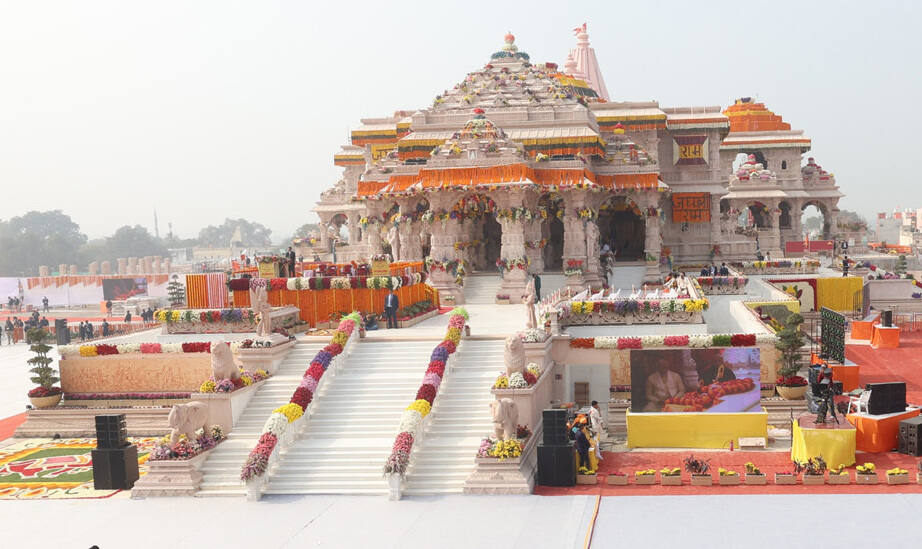
Ram Janmabhoomi Mandir in Ayodhya DhamThe Ram Mandir on its inauguration day
Photos from Wikimedia Commons. Select a photo for its author and licence.
Best time to go
When
What to expect
October to March
The comfortable season, with pleasant days and cold mornings; winter lows are around 7 to 10 C. It is also the busiest period, and late October to December is usually less crowded than January to March.
April to June
Very hot, with highs reported from 41 C up to 47 C. Long outdoor temple queues are hard in this heat.
July to September
Monsoon months, humid with moderate to heavy rain and fewer visitors. The Shravan Jhoola Mela falls in July-August.
Sights and activities
1
Shri Ram Janmabhoomi Mandir
The main temple, built on the site believed to be the birthplace of Lord Ram and opened on 22 January 2024. The stone temple is about 161 feet tall and houses a 51-inch idol of Ram Lalla.
Distance
About 2 km from Ayodhya Dham railway station
Entry
Free; aarti and darshan passes are also free
Timings
Darshan slots run 7 am to 12 noon and 1 pm to 9 pm, as listed by the temple trust; hours can change on festival days
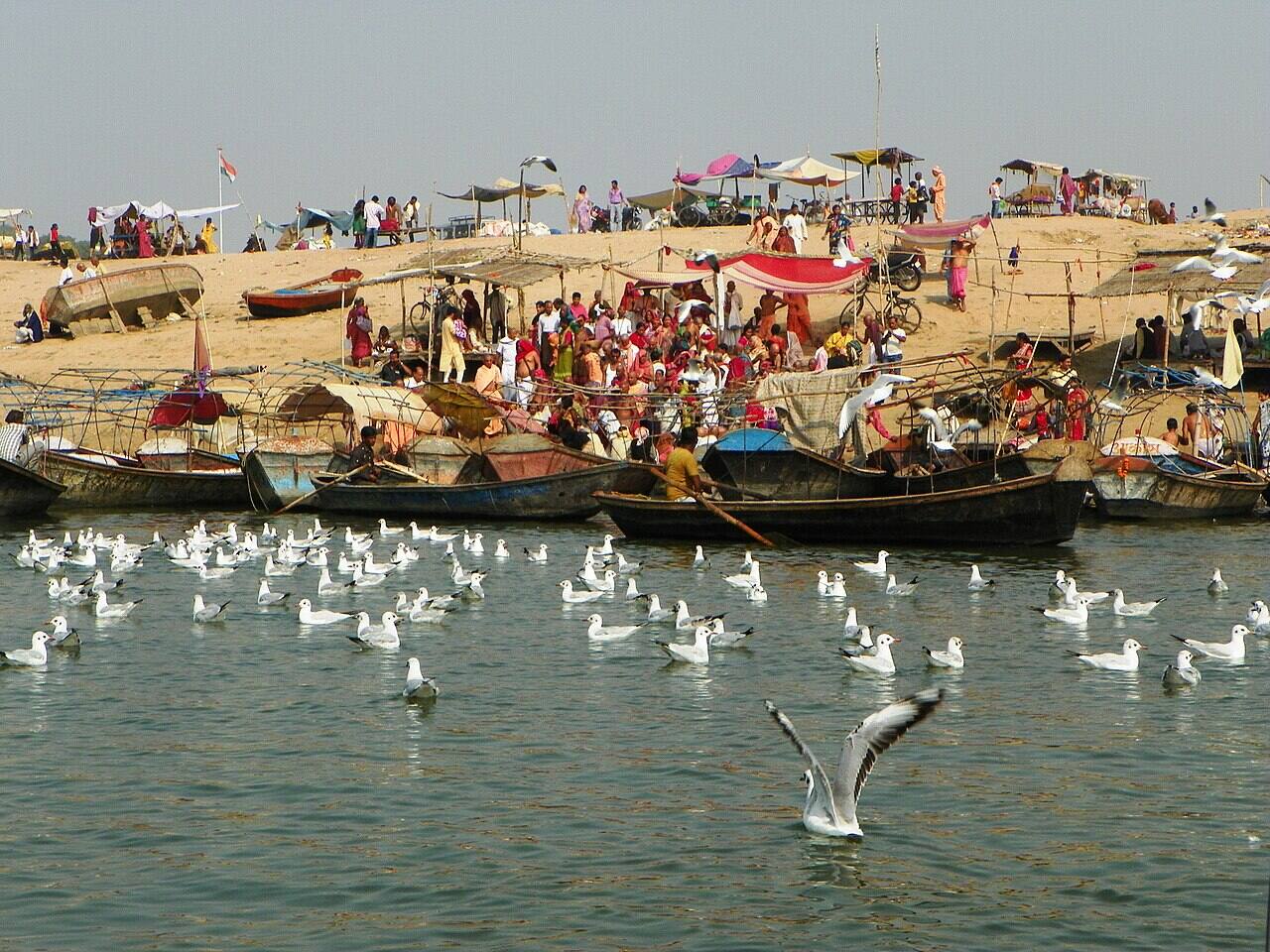
A long series of ghats on the bank of the Saryu where pilgrims bathe and perform rituals. It is the setting for the Deepotsav lamp festival on the eve of Diwali.
UPSRTC buses run round the clock, with frequent services from Lucknow (about 130 km), Delhi (about 636 km) and Gorakhpur (about 140 km), and scheduled buses from Varanasi and Prayagraj.
By train
Ayodhya Dham and Ayodhya Cantt are the two main stations, both in the city; Lucknow is about 135 km away by rail and trains take about 2.5 to 4 hours.
By air
Maharishi Valmiki International Airport, Ayodhya, is about 10 km from Ayodhya Dham; Lucknow airport is about 130 to 135 km away.
Where to base yourself
Stay in Ayodhya Dham near the railway station and the Ram temple, so the main shrines and the ghats are within about 3 km.
Getting around
Auto-rickshaws from the railway station or the airport to the temple area cost about 30 to 60 rupees.
Ram Janmabhoomi, Hanuman Garhi, Kanak Bhawan and Dashrath Mahal are within about 1 km of each other and are best covered on foot.
Taxis and auto-rickshaws can be hired for the outer sights such as Gulab Bari and Guptar Ghat; agree the fare before starting.
Wheelchairs and assistant-driven golf carts are reported at the entry point of the Ram temple.
Often combined with
Places people usually visit on the same trip, and how long it takes to get between them.
Dharamshalas, trust-run guest houses and simple hotels
₹500 to ₹1,500
Mid-range
Mid-range hotels near the temple area
₹2,000 to ₹5,000
Luxury
Branded upscale hotels
₹5,000 to ₹10,000
Food
Food is simple, low-priced North Indian fare from small eateries and street stalls; fine dining is limited. Free meals for pilgrims are reported at the Ram temple and at Sita ki Rasoi.
Try these
Puri-sabzi (fried bread with potato curry, a common breakfast)
Kachori and jalebi (stuffed fried bread with a syrupy sweet)
Chaat such as aloo tikki, pani puri and papri chaat (street snacks)
Peda and laddu (milk and gram-flour sweets, also offered as prasad)
Malpua and rabri (sweet pancake with thickened milk)
The town is vegetarian. Non-vegetarian food is not served or sold in the city area.
Daily costs
Budget level
Stay per room
Food per person
Local transport
Budget
₹1,000
₹300
₹150 per person
Mid-range
₹3,000
₹700
₹800 per vehicle
Luxury
₹7,000
₹1,500
₹2,000 per vehicle
Per day. Travel to and from your city is added in the planner above.
Permits and documents
No permit is needed. Carry a government photo ID such as Aadhaar or passport for the Ram temple. Darshan and aarti passes are free and can be booked online through the Shri Ram Janmbhoomi Teerth Kshetra trust; aarti passes are limited.
Safety
By day
Generally safe for visitors; take normal care of belongings in temple queues and crowded lanes.
At night
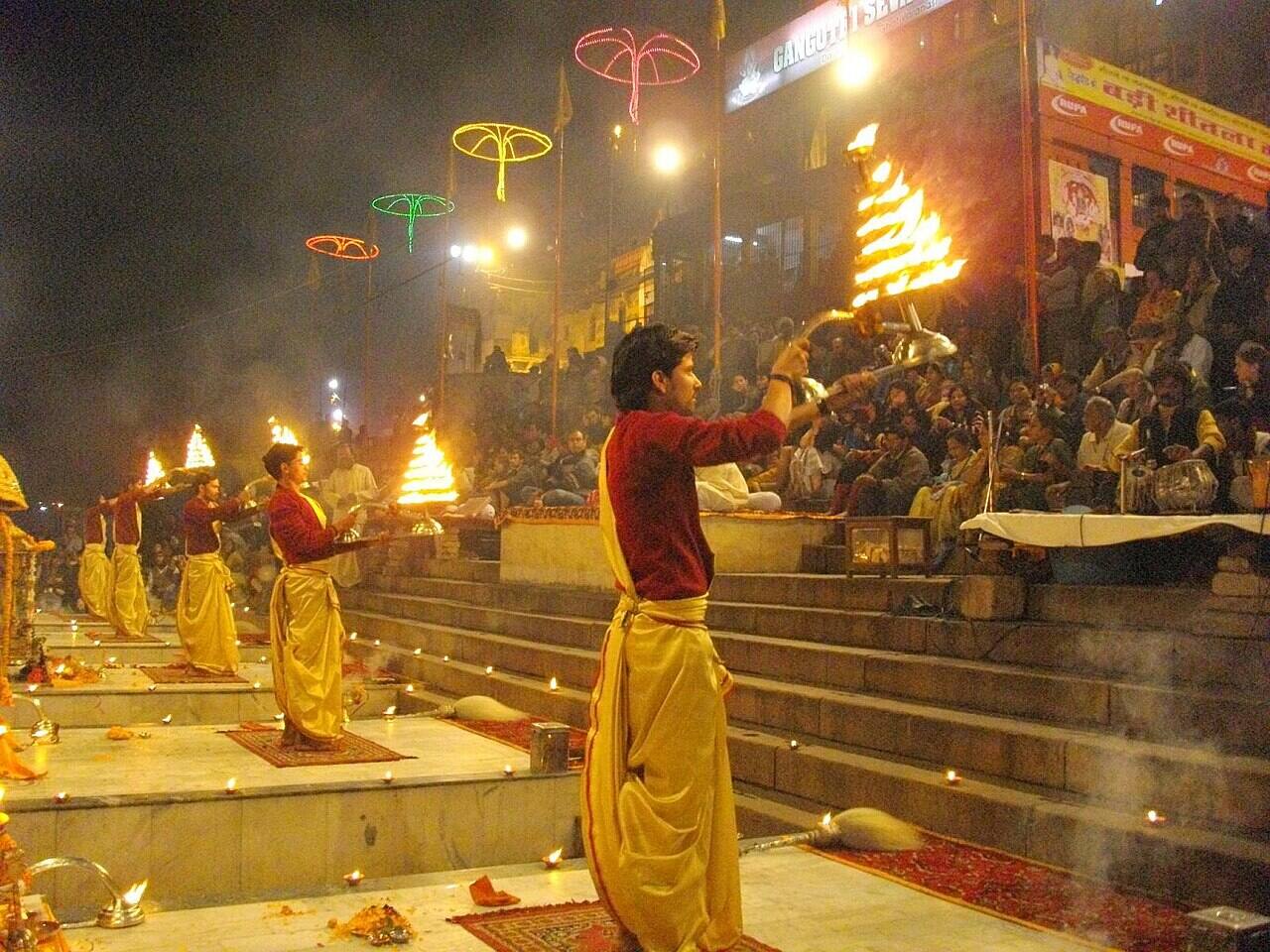
Evening aarti at the ghats draws crowds. Keep to the busy main roads.
Solo women
No specific advice was found online. The town is a busy family pilgrimage centre; dress modestly and use the Women Helpline 181 if needed.
Roads
Lucknow to Ayodhya is about 130 to 136 km on the highway, about 2.5 to 3 hours. Expect very heavy crowds and traffic limits on Ram Navami, Deepotsav and the consecration anniversary in late January.
The main temples are close together and mostly flat, and the Ram temple offers wheelchairs, golf carts and a priority pass for seniors and medical cases. Hanuman Garhi has 76 steps.
Children
Suitable for families, but queues at the Ram temple can take 1 to 3 hours, longer on weekends and festivals. Avoid April to June heat.
Wheelchair users
Wheelchairs and assistant-driven golf carts are reported at the Ram temple entry. Hanuman Garhi is reached only by steps.
Unless a sight is described as accessible, assume it is not step-free.
Culture and responsible travel
Dress modestly with shoulders and knees covered, and remove footwear at every temple.
Phones, cameras, smartwatches, leather belts, keys and bags are not allowed inside the Ram temple; free lockers are provided at the entry.
Do not photograph idols or inner sanctums, and ask before taking photos of people or rituals.
Local custom is to visit Hanuman Garhi before the Ram temple.
Ayodhya and Faizabad are two towns about 7 to 8 km apart; both names appear in booking systems, so check which one a hotel or station is in.
Keep the ghats clean and do not leave offerings or plastic in the Saryu.
What to pack
Photo ID (Aadhaar, passport or driving licence); hotels and permits ask for it
Clothes that cover shoulders and knees, and socks for hot stone floors where shoes come off. Some temples do not allow phones or bags, so carry little
Some cash in small notes for autos, stalls and tips
Your regular medicines, plus basics for stomach upsets, headaches and cuts